Class A vs Class C RV: Which Motorhome Is Right for You?
The class A vs class C RV decision trips up more first-time buyers than almost any other question in motorhome shopping. On paper the two look similar: both are drivable RVs with a bed, a kitchen, and a bathroom, and both run on a regular driver’s license in most US states. On the road, though, they drive, park, and cost money in very different ways.
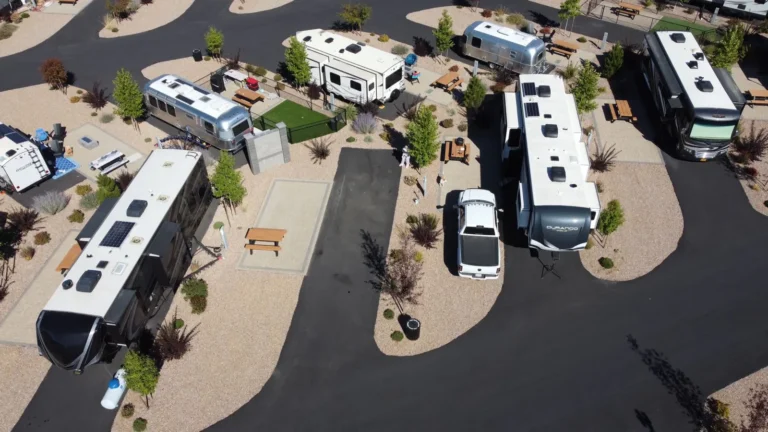
A Class A is the big bus-style rig you picture parked at a campground with the awning out and a satellite dish up. A Class C is the one built on a truck or van chassis with the cab-over bed hanging over the windshield. Neither is “better” — the right choice depends on how you travel, how many people come with you, and what you can afford.
This guide breaks down real price ranges, fuel costs, driving feel, and floor-plan differences so you can buy (or rent) the right one the first time. If you’re still deciding whether to own at all, our breakdown of RV rental vs buying covers the cost side of that call.
What Is a Class A Motorhome?
Class A motorhomes are built from the ground up on a heavy-duty chassis — commonly a Ford F-53, a Freightliner, or a Spartan chassis on higher-end diesel pushers. Because the whole body is custom-built, the driver and front passenger sit up high with a huge panoramic windshield, and the living space runs the full width of the vehicle.
Sizes run roughly 26 to 45 feet. Entry-level gas models like the Thor Motor Coach A.C.E. or the Fleetwood Flair start around $120,000 new, while diesel pushers from Newmar or Tiffin easily cross $400,000 and top out near $1 million for a flagship like the Newmar King Aire.
The selling point is space. A 35-foot Class A typically carries four slide-outs, a king bed, a residential refrigerator, and a washer/dryer hookup. That makes them the default choice for full-timers and snowbirds who live in the rig for months, not weekends.
What Is a Class C Motorhome?
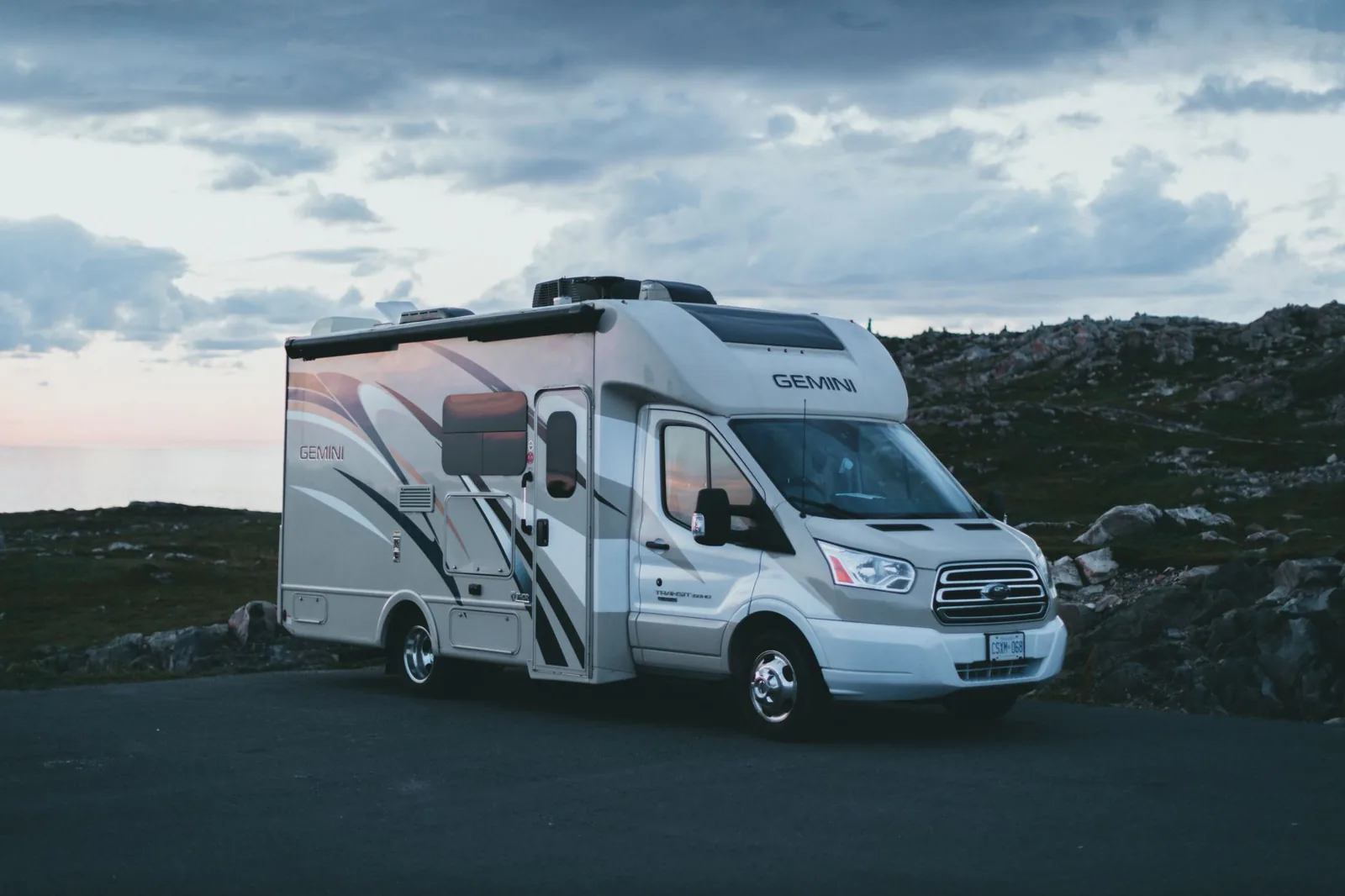
A Class C is built on a cutaway van or truck chassis — the front cab comes from a manufacturer like Ford (the E-Series and Transit) or Mercedes-Benz (the Sprinter), and the house section is built behind and above it. The giveaway is the cab-over bunk: a bed tucked over the driver and passenger seats.
Length runs roughly 20 to 33 feet, with two main sub-categories worth knowing:
- Standard Class C (22-33 ft): Built on a Ford E-Series or Chevy chassis, usually gas. Examples include the Jayco Redhawk, Winnebago Minnie Winnie, and Thor Chateau. New prices run roughly $80,000 to $150,000.
- Super C (33-45 ft): Built on a commercial truck chassis like the Freightliner M2 or Ford F-550, often diesel. Examples include the Renegade Verona and Dynamax Isata 5. These are the heavy hitters, from around $250,000 up.
Most families land on the standard Class C. It’s the smallest drivable RV that still gives you a permanent bed for the adults, bunks or a convertible dinette for the kids, and a real bathroom — all for less than a new Class A.
Class A vs Class C RV: Side-by-Side Comparison
Here’s how the two stack up on the numbers that actually matter when you’re shopping.
| Feature | Class A | Class C |
|---|---|---|
| Typical length | 26-45 ft | 20-33 ft (standard) |
| New price range | $120,000-$1,000,000+ | $80,000-$150,000 (standard) |
| Fuel economy (gas) | 6-10 mpg | 8-14 mpg |
| Chassis | Custom (Ford F-53, Freightliner) | Cutaway van/truck (Ford, Sprinter) |
| Sleeping capacity | 2-8 (king bed + sofa + dinette) | 4-8 (cab-over bunk + beds) |
| Driving feel | Bus-like, wide turns, air ride on diesel | Van-like, easier to maneuver |
| Best for | Full-timers, snowbirds, long trips | Families, weekenders, first-time owners |
The short version: Class A wins on living space and long-stay comfort. Class C wins on price, maneuverability, and everyday usability.

Photo by Charlie Seidowsky via Pexels
Driving and Parking: The Real Difference
This is where most people change their mind after a test drive, and it’s the biggest practical difference in the class a vs class c rv debate.
A Class A feels like driving a small bus. You sit in front of the front axle with a flat, upright dash, and the front wheels are behind you, which makes corners feel odd until you adjust. Tight turns require a wide, deliberate swing, and low branches, gas-station canopies, and narrow campground roads become things you actively plan around. The payoff is the view: that panoramic windshield makes highway miles genuinely enjoyable.
A Class C drives more like a large van or box truck. The cab is familiar — Ford or Mercedes controls, a normal steering position, a hood you can see. It fits in a standard parking space with overhang, handles a drive-thru (mostly), and is noticeably easier to back into a campsite. For a first-time owner who’s never driven anything bigger than an SUV, the Class C is the far gentler learning curve.
One overlooked factor is camping access. National park campgrounds often cap vehicle length around 27-32 feet, which locks many Class A owners out of the best in-park sites. A 24-28 foot Class C slips into far more of them.
Running Costs: Fuel, Maintenance, and Insurance
Upfront price is only the first bill. Here’s how the ongoing costs compare.
Fuel. A gas Class A burns 6-10 mpg with a tank that can hold 80-100 gallons. At $3.50 a gallon, a 300-mile day runs roughly $105-$175. A standard gas Class C returns 8-14 mpg on the same chassis engines, so the same day runs about $75-$130. Over a 5,000-mile summer, that gap is $500-$1,000 in favor of the Class C.
Maintenance. Both need the same oil changes, roof resealing, and tire work, but scale matters. A Class A’s tires, brakes, and suspension parts cost more and wear out under a heavier load. A set of six Class A tires can run $2,500-$3,500 installed; a Class C’s six are often closer to $1,500-$2,000. Diesel pushers add engine service costs that dwarf both.
Insurance. Expect roughly $1,000-$2,000 a year to insure a Class A, versus $800-$1,500 for a Class C, depending on your record, state, and whether you full-time. Shop RV-specific carriers like Progressive, Good Sam, and National General — regular auto insurers often underinsure motorhomes.
If keeping monthly costs down matters more than square footage, the Class C wins this category outright. For a fuller look at what motorhomes actually cost to own and run, see our guide to Class C RV cost.
Interior Space and Floor Plans
Space is the Class A’s home-field advantage. Its full-width body and bus-style construction create a genuinely residential layout: a front living room, a mid kitchen, a rear king-bed suite, and slide-outs that open the whole thing up to nearly apartment-like proportions. A 35-40 foot diesel pusher with four slides is effectively a one-bedroom apartment on wheels, which is exactly why full-timers gravitate to it.

Photo by Efrem Efre via Pexels
A Class C works harder with less. The standard layout squeezes a queen bed in the rear, a dinette that converts to a bed, a small sofa, and the cab-over bunk up front. It’s tighter — a 25-foot Class C gives a family of four about 200-230 square feet of living space, versus 300-400 square feet in a typical 35-foot Class A. But the Class C’s bunk bed is a feature the Class A can’t match: kids love it, and it means the adults don’t have to make and break the dinette every night.
Bathrooms and kitchens follow the same pattern. Class A kitchens get residential refrigerators, three-burner stoves, and real counterspace. Class C kitchens are smaller and more angled, with RV-sized appliances. Class A bathrooms often split the shower and toilet; most Class Cs run a compact wet bath where the shower, sink, and toilet share one small room.
Towing Capacity and Cargo
If you plan to tow a car, boat, or trailer behind the motorhome, this category matters.
A gas Class A on the Ford F-53 chassis typically tows 5,000-8,000 pounds. A diesel pusher, thanks to its air suspension and bigger engine, tows 10,000-15,000 pounds — enough for a full-size pickup or a large enclosed trailer. This is a core reason serious travelers choose diesel Class As.
A standard gas Class C tows 5,000-7,500 pounds, which handles a small car, a boat, or a pair of jet skis but not much more. A Super C built on a Freightliner M2 or Ford F-550 can tow 10,000-30,000+ pounds, which is why toy haulers and race teams run them.
Cargo capacity (payload) leans Class A, too. A big diesel pusher can carry 5,000-10,000 pounds of your stuff; a standard Class C is usually in the 1,500-3,000 pound range. Full-timers hauling tools, bikes, and months of supplies feel this limit quickly.
Which Should You Choose?
The honest answer is that the class a vs class c rv question almost always comes down to one thing: how much time you’ll actually spend in it.
Choose a Class A if: you’re a full-timer or long-stay snowbird, you want the most living space and the best highway view, you’ll tow a vehicle or boat, and your budget comfortably clears $150,000 for a used gas model or $250,000-plus for a diesel pusher.
Choose a Class C if: you’re buying your first motorhome, you travel with kids, you want something you can park and drive without a second thought, and you’d rather keep the purchase price under $150,000 while still getting a real bed, kitchen, and bathroom.
Still weighing whether to buy at all? Renting first is the smartest way to test the difference on a real trip. Check our numbers on RV rental cost per week before you commit to six figures of debt.
Frequently Asked Questions
Is a Class A or Class C RV easier to drive?
A Class C is easier to drive for most people. It has a familiar van or truck cab, a hood you can see, and tighter turning. A Class A feels like a bus and takes longer to learn, though its high seating position and panoramic windshield make highway driving comfortable once you’re used to it.
Which is cheaper to buy, Class A or Class C?
A Class C is cheaper. New standard Class Cs run roughly $80,000-$150,000, while gas Class As start around $120,000 and diesel pushers reach $1 million. Used Class Cs are also plentiful in the $40,000-$70,000 range, well below what a comparable used Class A commands.
Can you drive a Class A or Class C with a regular license?
In most US states, yes — both are legal on a standard driver’s license, since neither exceeds the 26,000-pound GVWR threshold that triggers a commercial license. A handful of states have extra requirements, so check your state’s DMV before buying.
Which is better for a family?
A Class C is generally better for families. The cab-over bunk gives kids their own dedicated bed without making up the dinette, and the smaller footprint fits more campgrounds and parking lots. A Class A offers more total space but at a much higher price and with more driving stress.
What’s the fuel mileage difference?
A Class C usually gets 8-14 mpg versus 6-10 mpg for a gas Class A, because it’s lighter and smaller. Over a long road trip, that difference adds up to hundreds of dollars in saved fuel.
For a full class-by-class breakdown, RVshare explains RV classes and sizes.
The Bottom Line
The class a vs class c rv choice is a trade between space and simplicity. Buy the Class A if you’re living on the road and want a rolling apartment with room to breathe; buy the Class C if you want a family-friendly, budget-conscious motorhome that won’t make you nervous every time you pull into a campground.
Whichever way you lean, the best move is to walk through both at a dealer or RV show, then rent the style you’re leaning toward for a long weekend. A single real trip will tell you more about the right choice than any spec sheet — including this one. For more on what these rigs actually cost to keep on the road, see our guides to RV rental vs hotel and Class C RV cost.