RV vs Camper: Which One Is Right for Your Road Trip?
The RV vs camper question trips up plenty of first-time road trippers, and for good reason: people toss the two words around like they mean the same thing, when they usually describe two different classes of vehicle. Sorting out the difference before you spend a dollar will save you money, campground frustration, and a lot of time behind the wheel.
Here’s the short version. “RV” is the umbrella term for every drivable or towable recreational vehicle, from a $400,000 Class A diesel pusher to a $5,000 used pop-up trailer. A “camper” is a specific kind of RV, and in most conversations it means the smaller, simpler end of the spectrum: a camper van, a truck camper, or a towable trailer. In other words, every camper is an RV, but not every RV is a camper.
The right answer depends on how you travel, who’s coming with you, and what you’re willing to spend. This guide breaks down the real differences in cost, space, driving, and comfort so you can decide with confidence instead of guessing at the dealership.
What’s the Difference Between an RV and a Camper?
The cleanest way to think about it is drivable versus towable, plus size and price.
A motorhome is a self-contained vehicle you drive from the front seat straight into the living space. A camper, in the narrower sense, either rides in the bed of a pickup (a truck camper), is towed behind another vehicle (a travel trailer or pop-up), or is a compact van you can park almost anywhere (a camper van, also called a Class B).
The practical differences show up fast:
- Cost to buy. A new travel trailer averages $25,000 to $40,000. A new Class A motorhome starts around $100,000 and climbs past $300,000 for diesel models. Campers are almost always cheaper to enter.
- What you need to tow it. A towable camper means you already own (or must buy) a pickup or SUV with enough towing capacity. A motorhome needs nothing but itself.
- Setup at camp. A camper van or motorhome parks and you’re done. A trailer requires hitching, unhitching, and leveling every time you stop.
- What you do once you arrive. A motorhome is your only vehicle, so a grocery run means packing up camp or renting a car. With a truck camper or trailer, you detach the rig and drive the tow vehicle around town.
Most “RV vs camper” debates really come down to this: do you want one all-in-one vehicle you drive everywhere, or a cheaper living space that attaches to a vehicle you already own?
The Main Types of RVs and Campers
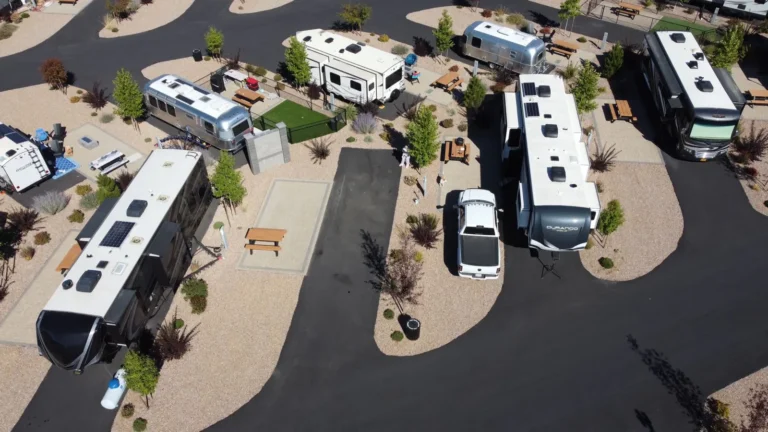
Before comparing costs, it helps to know exactly what’s on the menu. The RV market breaks into two big camps: motorized and towable.
Motorized RVs
These are the ones you drive.
- Class A motorhome. The bus-sized rig, 26 to 45 feet long. Full residential features: king beds, stacked washers and dryers, residential refrigerators. New prices run $100,000 to $500,000. Best for full-timers and long-haulers with a real budget.
- Class C motorhome. Built on a truck or van chassis with a cab-over bed, 20 to 35 feet. The sweet spot for families who want a real bathroom and kitchen but don’t want to drive a bus. Expect $60,000 to $150,000 new. We break down the numbers in our guide to Class C RV cost.
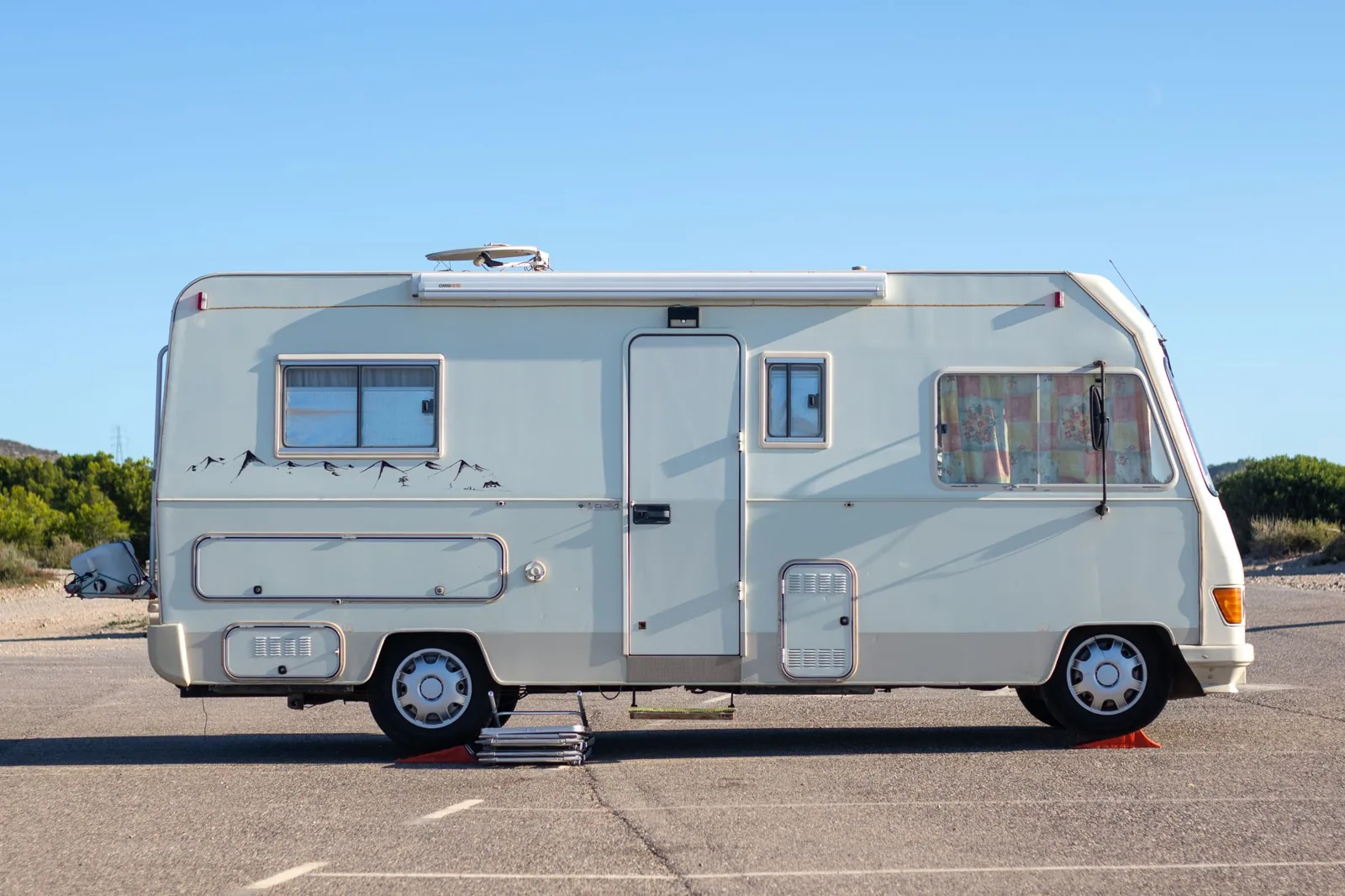
- Class B camper van. A converted van, 17 to 23 feet, that drives and parks like a delivery van. Most expensive per square foot, at $100,000 to $200,000 new, but the easiest to live with daily. This is what most people picture when they say “camper.”
Towable Campers
These attach to a pickup or SUV.
- Travel trailer. The classic towable camper, 12 to 35 feet, hitched to a standard receiver. The most popular entry point into RVing, with new models from $15,000 to $80,000. See our breakdown of travel trailer cost for real price ranges.
- Fifth wheel. A larger trailer that hitches inside the bed of a pickup via a special fifth-wheel hitch, 22 to 40 feet. Tall ceilings and residential layouts; requires a heavy-duty truck.
- Truck camper. A hard-sided unit that slides into the bed of a pickup. The most compact and off-road-capable option, usually $15,000 to $50,000 new.
- Pop-up / folding camper. A collapsible trailer with canvas sides, 8 to 16 feet when open. The cheapest way to get off the ground, from $5,000 to $20,000 new.

Photo by Natalia Ferrara H via Pexels
Cost: What You’ll Actually Pay
Money is where most RV vs camper decisions get made, so let’s look at real numbers for both buying and renting.
Purchase Prices
A camper — meaning a travel trailer, truck camper, or pop-up — is almost always the cheaper buy. A new 24-foot travel trailer from a brand like Forest River or Keystone runs roughly $25,000 to $40,000, and a used one in good shape can be found for $10,000 to $20,000. A new truck camper sits around $20,000 to $45,000.
Motorized RVs start higher. A new Class C from Winnebago or Thor runs $70,000 to $150,000. A Class B camper van from Winnebago Travato or Airstream starts around $120,000 and crosses $200,000 fully loaded. A Class A starts near $100,000 and doesn’t blink past $300,000.
But the sticker price isn’t the whole story. A towable camper requires a capable tow vehicle, which can add $40,000 to $70,000 if you don’t already own one. A motorhome needs no second vehicle but costs more to insure, maintain, and store. And depreciation hits hard on the motorized side: many motorhomes lose 20 to 30 percent of their value in the first three years.
Rental Prices
If you’re testing the lifestyle, renting is the low-risk move. On peer-to-peer platforms like RVshare and Outdoorsy:
- Travel trailer rental: $50 to $125 per night, plus a tow vehicle if needed.
- Class C rental: $150 to $250 per night in peak season.
- Class B camper van rental: $175 to $350 per night.
- Class A rental: $200 to $450 per night.
Weekly rates usually land around six times the nightly rate, which is why a seven-night trip can cost $1,000 to $3,000 depending on the rig. Our guide to RV rental cost per week walks through the math, and if you’re on the fence about renting versus owning, start with RV rental vs buying.
Space, Comfort, and Livability
If you’re traveling as a couple or solo, a camper van or truck camper gives you everything you need: a bed, a small kitchen, and in most camper vans, a wet bath. You lose a little elbow room and gain the freedom to park anywhere a car fits.
Families and longer trips tilt the balance toward bigger rigs. A Class C or a mid-size travel trailer adds separate sleeping areas, a full bathroom with a separate shower, a dinette that converts to a bed, and room to stand up and move past each other — which matters more than it sounds when it’s raining for three days straight.
Here’s a realistic way to frame it:
- Solo or couple, weekend trips: camper van, truck camper, or small travel trailer.
- Family of four, week-long trips: Class C motorhome or a 24- to 30-foot travel trailer.
- Full-time living or extended snowbird seasons: Class A motorhome or a fifth wheel with a residential layout.

Photo by Ana Benet via Pexels
Driving, Parking, and Fuel
The biggest everyday difference between an RV and a camper is what it’s like to actually operate the thing.
A camper van handles like a large van. It fits in a standard parking spot, gets 14 to 20 miles per gallon, and slips into most national-park campgrounds without a second thought. A truck camper is slightly trickier (it raises your center of gravity), but you still drive a normal pickup.
A Class A or a long travel trailer is a different animal. A 35-foot Class A gets 6 to 10 miles per gallon, can’t go through most drive-thrus, and needs pull-through sites or a practiced hand to back into a spot. Towing a 30-foot trailer adds a whole skill set: hitching, sway control, and learning to back up a trailer without an argument in the passenger seat.
Fuel is a real line item either way. At $3.50 a gallon, a 3,000-mile cross-country trip costs about $650 in a camper van but $1,200 to $1,750 in a Class A. Over a season, that gap pays for a lot of campground nights.
RV vs Camper: Side-by-Side Comparison
| Feature | Camper (van, truck camper, trailer) | Motorized RV (Class A/B/C) |
|---|---|---|
| Typical new price | $5,000 – $80,000 | $60,000 – $500,000 |
| Drivable on its own | No (unless it’s a camper van) | Yes |
| Second vehicle needed | Tow vehicle for trailers | No |
| Fuel economy | 14 – 20 mpg (van) or no fuel | 6 – 14 mpg |
| Parking ease | High (van/truck camper) | Low (Class A) |
| Sleeping capacity | 2 – 6 | 2 – 8 |
| Full bathroom | Rare in smaller units | Common |
| Best for | Couples, budget trips, off-grid | Families, full-timers, long hauls |
| Depreciation | Slower | Faster |
Frequently Asked Questions
Is a camper the same as an RV?
Not exactly. An RV is the umbrella term for all recreational vehicles. A camper is one type of RV, typically smaller and either towable or mounted on a truck, though many people also call camper vans “campers.”
Is a camper van or a motorhome better for two people?
For two people, a camper van usually wins on daily usability. It’s easier to drive, cheaper on fuel, and fits in more places. A motorhome wins only if you want a full bathroom, more storage, or plan to live in it for months at a time.
What’s cheaper, an RV or a camper?
A camper is almost always cheaper to buy, insure, and store. The catch is that towable campers require a tow vehicle, which can erase some of the savings if you don’t already own a suitable truck or SUV.
Do I need a special license to drive an RV or tow a camper?
In most U.S. states, no special license is required for motorhomes or trailers under 26,000 pounds combined weight. Requirements vary by state for very large rigs, so check your state’s DMV before buying anything over 40 feet.
Should I rent before I buy?
Almost always, yes. A week in a rental tells you more about what you actually need than any amount of research. See RV rental vs buying for a full cost comparison before you commit.
For the formal definitions and differences, Camping World explains RV types.
The Bottom Line
The RV vs camper choice comes down to three honest questions: Who’s traveling, how much do you want to spend, and how do you like to camp?
If you’re a couple or a solo traveler who wants to keep costs down and park anywhere, a camper — a van, truck camper, or small travel trailer — is almost certainly your answer. If you’re hauling a family, want a real bathroom and separate sleeping space, or plan to live on the road for months, a Class C or Class A motorhome earns its higher price.
Still not sure which way to go? Rent both before you buy. A long weekend in a camper van and another in a Class C will settle the debate faster than any spec sheet, and you’ll walk into the purchase knowing exactly what you’re paying for.