Best Carry On Luggage for Travel: 7 Bags Worth Buying in 2026
The best carry on luggage for travel is the bag that fits your airline, your budget, and the way you actually pack. Over the past decade I’ve tested more than two dozen carry-on suitcases across budget carriers like Spirit and Frontier and full-service airlines like Delta and United, and the gap between a great carry-on and a mediocre one is enormous: a good one glides, survives years of overhead-bin abuse, and holds more than it looks like it should.
This guide cuts through the marketing. I’ll show you seven bags worth your money, break down real size and weight limits by airline, and flag the features that actually matter (and the ones you can ignore).
What to Look for in the Best Carry On Luggage for Travel
Before you spend $300 on a suitcase with a built-in battery you’ll never charge, focus on four things.
Size that clears the sizer. The standard domestic carry-on allowance is 22 x 14 x 9 inches, including wheels and handles. A bag that’s 22.5 inches tall can get gate-checked on United’s basic economy or Ryanair, and you’ll pay $60+ at the gate. Check the exterior dimensions, not the interior capacity, and read our guide to carry on luggage size before you buy.
Weight. Hard-sided bags now run 7 to 9 pounds empty; soft-sided bags are closer to 5 to 7 pounds. That matters on airlines like Qantas, Emirates, and several Asian carriers that cap carry-on weight at 7 kg (about 15.4 pounds). If your empty bag eats half that allowance, you’re in trouble — see carry on luggage weight limit for the full breakdown.
Wheels. Four spinner wheels are easier to roll through a crowded terminal, but they add weight and eat into interior space. Two-wheel designs hold more and roll better over cobblestones. For most travelers, a good four-wheel spinner is the better daily driver.
Warranty. The best brands stand behind their products. Away, Monos, and Briggs & Riley all offer lifetime or long warranties that cover airline damage, which is the single best signal of build quality.
The 7 Best Carry On Luggage Bags Compared
Here’s the shortlist, with the feature that matters most next to each one.
| Feature | Away Carry-On | Monos Carry-On Pro | Travelpro Platinum Elite | Samsonite Freeform |
|---|---|---|---|---|
| Price | $315 | $305 | $370 | $180 |
| Weight | 7.5 lb | 7.1 lb | 7.8 lb | 6.9 lb |
| Dimensions | 21.7 x 14.4 x 9 | 22 x 14 x 9 | 23.5 x 14.5 x 9 | 21.25 x 15.25 x 10 |
| Shell | Polycarbonate | Polycarbonate | Softside nylon | Polycarbonate |
| Warranty | Limited lifetime | Limited lifetime | Limited lifetime | 10-year |
| Best for | All-around value | Laptop travelers | Business flyers | Budget shoppers |

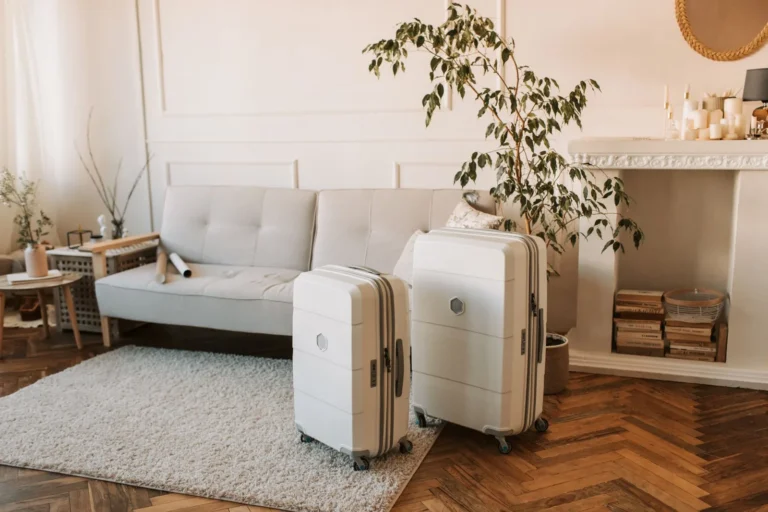
Photo by rakhmat suwandi via Pexels
Best Overall: Away Carry-On
The Away Carry-On (21.7 x 14.4 x 9 inches, 7.5 pounds) is the default recommendation for a reason. The polycarbonate shell flexes on impact instead of cracking, the 360-degree Hinomoto wheels are the same ones used on far pricier bags, and the interior compression system genuinely lets you pack five to seven days of clothes.
It has a few quirks. The built-in battery (removable on the standard model) adds weight you may never use, and the exterior scuffs more visibly on dark colors. But at $315 with a limited lifetime warranty, it’s the best all-around carry-on under $400. If you want the same design with a front laptop pocket, step up to the Bigger Carry-On or the Flex model.
Best for Laptop Travelers: Monos Carry-On Pro
The Monos Carry-On Pro takes the same clean polycarbonate formula and adds a padded front pocket sized for a 15-inch laptop plus a tablet. That pocket is the real reason to pick this bag: you can pull out your laptop at security without opening the main compartment.
It’s 22 x 14 x 9 inches and 7.1 pounds, with an antimicrobial lining, YKK zippers, and a compression pad. At $305 it’s a near-twin of the Away, but the front pocket and slightly lower weight tip it for anyone who flies with a laptop every week.
Photo by Jahra Tasfia Reza via Pexels
Best for Business Flyers: Travelpro Platinum Elite
If you’re on the road constantly, the Travelpro Platinum Elite 21-inch Expandable Spinner is the working traveler’s pick. Its nylon softshell with DuraGuard coating shrugs off scuffs better than any hard case, and the expandable frame gives you 2 extra inches when you need them.
The downsides: at 23.5 x 14.5 x 9 inches it sits at the top of the domestic limit, and 7.8 pounds is on the heavy side. But the precision-glide wheels and the lifetime “Built For a Lifetime Limited Warranty” make it the bag airline crews actually use. At $370, it’s worth it if you fly twice a month or more.
Best Budget: Samsonite Freeform
The Samsonite Freeform (21.25 x 15.25 x 10 inches, 6.9 pounds) is routinely available for $150 to $180 and delivers 80% of the Away experience for about half the price. The 100% polycarbonate shell is thinner than Away’s, so it flexes more and can crack under a hard drop, but Samsonite’s 10-year limited warranty covers defects.
The one thing to check: at 15.25 inches wide, it’s slightly over the 14-inch width some sizers allow. It fits Delta and American bins without issue, but verify before flying Spirit or a European budget carrier.
Also Worth Considering
- Briggs & Riley Baseline 21″ Carry-On Expandable Spinner ($429–$499): the only mainstream brand with an unconditional lifetime repair guarantee. Heavier and pricier, but it’s a buy-it-once purchase.
- July Carry On ($275): an Australian brand with a built-in power bank and a 100-day return window. Good if you want an Away-style bag with more color options.
- Delsey Paris Chatelet ($250): a softside option with a timeless look and a braking front wheel that stops it rolling on trains. Style over function, but well made.
Carry-On vs. Checked: Which Should You Pack?
For trips under a week, carry-on almost always wins. You skip the check-in line, avoid lost-luggage claims (airlines mishandled roughly 7.6 bags per 1,000 passengers in 2023, per SITA’s annual report), and save $35–$40 each way on most US carriers.
Checked luggage only makes sense when you need more than 45 liters, are hauling liquids over the TSA’s 3.4-ounce limit, or are bringing gifts that won’t compress. If you’re still deciding, our comparison of carry on luggage vs checked luggage walks through the math, including how much a single checked bag adds to a round-trip.
One more consideration: international trips. European budget airlines enforce carry on luggage dimensions far more strictly than US carriers, and many cap weight at 8 to 10 kg. Measure twice, book once.
How to Pack More in the Same Space
A great bag only gets you so far — how you pack decides whether you travel for five days or nine.
- Roll, don’t fold. Rolling compresses clothes and fills the corners of a spinner that folding leaves empty.
- Use compression cubes. They add structure and squeeze bulky items like sweaters and jeans by a third.
- Wear your bulkiest layer on the plane — boots, jacket, and jeans — instead of packing them.
- Pack a second pair of shoes in a shower cap to keep the soles off your clothes.
- Exploit the dead zones: socks and chargers go inside shoes, and belts line the bag’s outer edge.
Frequently Asked Questions
What is the best carry on luggage for travel right now?
For most people it’s the Away Carry-On ($315) or the Monos Carry-On Pro ($305). Both are polycarbonate spinners under 22 x 14 x 9 inches with lifetime warranties. Budget shoppers should look at the Samsonite Freeform, and frequent business flyers will prefer the Travelpro Platinum Elite.
What size carry-on is allowed on all airlines?
There’s no universal size. The safest bet is 21.5 x 13.5 x 9 inches, which clears the strictest common sizer (Ryanair and some Asian carriers are tighter). The classic 22 x 14 x 9 inch domestic standard fits most US airlines but can fail on budget European carriers.
Is a hard or soft carry-on better?
Hard-sided bags protect fragile contents and clean up easily but weigh more and can crack under impact. Soft-sided bags weigh less, expand more, and shrug off scuffs. If you carry electronics or souvenirs, go hard; if you want maximum capacity and lighter weight, go soft.
Do I need a carry-on with a built-in battery?
Only if you’ll actually use it. The battery adds roughly half a pound and you must remove it at security (it can’t be gate-checked in the hold). If you already carry a phone power bank, skip the built-in one.
How much should I spend on carry-on luggage?
$150 to $350 is the sweet spot. Under $150 you’ll start seeing thinner shells, weaker zippers, and 1- to 3-year warranties. Above $350 you’re paying for brand cachet or a lifetime repair guarantee like Briggs & Riley’s.
The Bottom Line
The best carry on luggage for travel is the bag that fits your airline’s sizer, weighs as little as possible, and is backed by a real warranty. For most travelers, that’s the Away Carry-On or Monos Carry-On Pro around $300; for budget shoppers it’s the Samsonite Freeform under $180; for road warriors it’s the Travelpro Platinum Elite.
Before you click buy, measure your bag’s exterior dimensions against the airlines you fly most, check the carry on luggage size limits for your usual routes, and weigh your empty bag so a 7 kg international limit doesn’t ambush you at the gate. Get those three numbers right and you’ll have a carry-on that earns its spot in the overhead bin for a decade.
Want more gear guidance? Browse our full library of luggage and travel gear reviews, or start with our roundup of the best travel backpack if you’d rather carry your world on your shoulders.