Carry-On Luggage Weight Limit: What Every Traveler Needs to Know
There is no single answer to the question “how heavy can my carry-on be.” The carry on luggage weight limit changes depending on the airline you fly, the cabin you book, and sometimes the specific route. Fly around the US on Delta or United and weight rarely gets checked at all. Fly Emirates or Qatar in economy and a strict 7 kg (15 lb) cap applies, enforced at the gate with a scale.
That gap — from “no limit” to “barely seven kilograms” — is why seasoned travelers check the rules before they pack, not after they’ve zipped a 12 kg roller shut. This guide breaks down the real limits by airline, what actually counts toward the total, and how to stay under the weight so you never repack on the airport floor.
Why Carry-On Luggage Weight Limits Vary by Airline
Carry-on weight rules split roughly into two camps. Most US carriers and a few European low-cost airlines (like easyJet) publish no formal weight limit. Instead they rely on one practical test: you must be able to lift your own bag into the overhead bin without help. If you can hoist it, it flies. The logic is simple — crew are not obligated to lift passenger bags, and a bag you can’t lift is a liability in turbulence.
Most airlines outside the US take the opposite approach and set a hard number, typically 7 kg, 8 kg, 10 kg, or 12 kg. These carriers weigh bags at check-in or at the gate far more often. The stated reason is overhead-bin safety and cabin comfort, but it also nudges passengers toward paid checked baggage, which is a meaningful revenue line for full-service airlines.
The difference is not just cosmetic. A 7 kg limit forces a fundamentally different packing style than an unweighted 10 kg roller. Before you buy a bag, check the size rules too — our guides to carry-on luggage size and carry-on luggage dimensions walk through the exact measurements that fit in today’s overhead bins.
Carry-On Luggage Weight Limits on US Airlines
The good news for US flyers: the largest domestic airlines do not enforce a published weight limit on carry-on bags. Delta, American Airlines, United, Southwest, Alaska Airlines, and JetBlue all leave weight unregulated, provided the bag fits their size sizer and you can lift it into the bin unaided.
Here’s the practical table by carrier:
| Airline | Carry-On Weight Limit | Notes |
|---|---|---|
| Delta Air Lines | No published limit | Must lift into overhead unaided |
| American Airlines | No published limit | Mainline; smaller bins on regional jets |
| United Airlines | No published limit | Same rule; basic economy still gets a carry-on |
| Southwest Airlines | No published limit | Two free checked bags too — bags still must fit sizer |
| Alaska Airlines | No published limit | Must stow unassisted |
| JetBlue | No published limit | Size-driven, not weight-driven |
There are two real exceptions to the “no limit” rule. First, regional flights. Smaller Embraer and CRJ aircraft flown by Delta Connection, American Eagle, and United Express have smaller overhead bins, so “hard-side” rollers sometimes must be gate-checked regardless of weight. Second, ultra-low-cost carriers. Spirit and Frontier base their fares around the personal item and sell carry-on access separately, and while they focus on size, a bag that is both oversized and heavy will draw a gate fee.
The bottom line for domestic travel: buy a roller that meets the size rules and keep it light enough to lift. That’s it. If you’re choosing between bags, our roundup of the best carry-on luggage for travel covers models that stay under 8 lb (3.6 kg) empty, which leaves more of the unspoken budget for your stuff.
International Carry-On Luggage Weight Limits
Once you cross a border, assume a number applies — and assume someone will weigh it. This is where travelers get caught most often.
Photo by Towfiqu barbhuiya via Pexels
The most common economy-class limits on long-haul international carriers:
| Airline | Economy Carry-On Weight Limit |
|---|---|
| Emirates | 7 kg (15.4 lb) |
| Qatar Airways | 7 kg (15.4 lb) |
| Etihad Airways | 7 kg (15.4 lb) |
| Singapore Airlines | 7 kg (15.4 lb) |
| Qantas | 7 kg (15.4 lb) |
| Cathay Pacific | 7 kg (15.4 lb) |
| Lufthansa | 8 kg (17.6 lb) |
| Turkish Airlines | 8 kg (17.6 lb) |
| Air France / KLM | 12 kg (26.4 lb) combined |
| British Airways | Up to 23 kg (51 lb), lift unaided |
| Japan Airlines / ANA | 10 kg (22 lb) |
| Korean Air | 10 kg (22 lb) |
A few stand out. British Airways is the most generous of the majors, technically allowing a bag up to 23 kg as long as you can lift it — in practice most people cap out well below that. Air France and KLM apply a combined 12 kg across both your cabin bag and your personal item, so a 3 kg laptop bag leaves you only 9 kg for the roller. The Gulf carriers (Emirates, Qatar, Etihad) and Qantas run the strictest common standard at 7 kg, and their gate agents genuinely weigh bags, especially on flights out of Asia and the Middle East.
Low-cost European carriers split again. Ryanair’s “Priority & 2 Cabin Bags” fare allows a 10 kg cabin bag up to 55 x 40 x 20 cm, while the base fare permits only a small under-seat personal item (40 x 20 x 25 cm). easyJet publishes no weight limit but repeats the unassisted-lift rule and enforces a 45 x 36 x 20 cm sizer.
If you fly internationally often, treat 7-8 kg as your working budget and 12 kg as the ceiling. That single habit prevents nearly every common gate surprise.
What Counts Toward Your Carry-On Weight Limit
A frequent mistake is assuming the published number applies only to the big roller. On most international carriers, the limit includes nearly everything you carry into the cabin.
Typically the total covers:
- Your main cabin bag (roller, duffel, or backpack)
- Your personal item (laptop bag, handbag, or small backpack) on carriers like Air France, KLM, and Singapore Airlines
- The laptop, tablet, and charger inside the bag
- Liquids in their clear bag, headphones, and books
Shopping bags count too. Duty-free purchases, a jacket stuffed with a tablet, and the “extra” camera bag are all cargo in the eyes of a gate agent with a scale. Some carriers (Emirates, for example) do allow a separate personal item on top of the 7 kg allowance, while others fold it into the total — this is exactly the kind of fine print worth confirming on your airline’s own baggage page before you head to the airport.
The easy way to think about it: if it boards the plane with you and isn’t literally on your body, assume it counts.
How to Stay Under the Carry-On Luggage Weight Limit
Packing to a hard weight is a skill, and it starts before you open the suitcase.
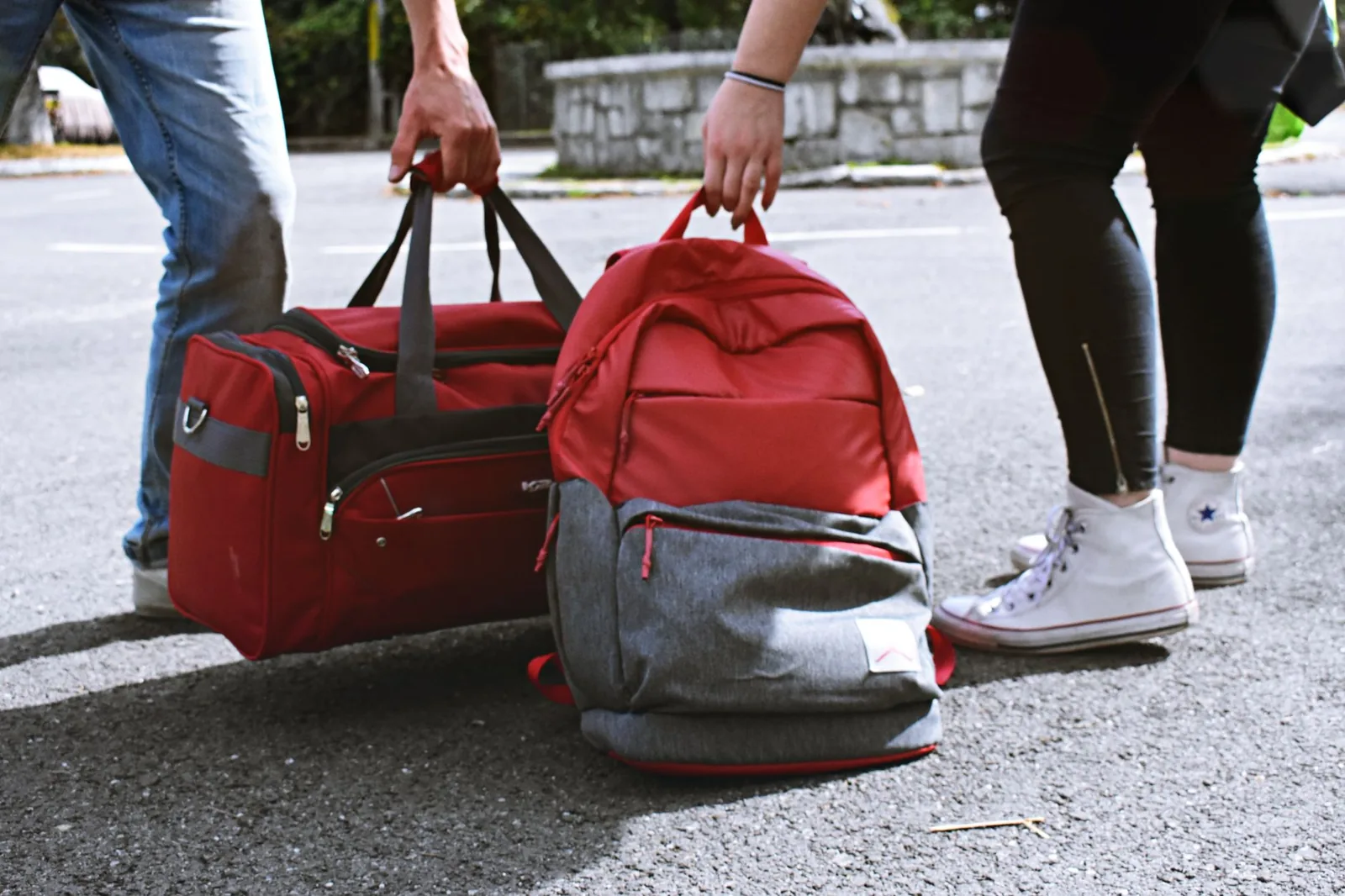
Photo by Diana via Pexels
First, buy an inexpensive handheld luggage scale. Decent ones cost $10-15 and eliminate all guesswork — hanging your packed bag from the scale takes ten seconds and tells you the exact number before you leave the house.
Choose a light bag from the start. A hard-side spinner that weighs 9 lb (4.1 kg) empty has already eaten more than half a 7 kg allowance before you pack a single shirt. Soft-shell and hybrid bags often weigh 4-6 lb (1.8-2.7 kg), and every pound saved on the bag is a pound of clothes you can actually bring.
Cut the dense items. Liquids, heavy chargers, hardcover books, and full-size toiletries are the fastest way to blow a weight budget. Switch to a travel-size toiletry kit, a single multi-port USB charger, and e-readers over paper books.
Wear the heavy stuff. Jeans, boots, a jacket, and a sweater are best worn on the plane, not packed. On a strict 7 kg airline, your heaviest footwear and layer almost always make more sense on your body.
Density over volume. Two pairs of lightweight pants beat three pairs of heavy jeans. Rolled merino and quick-dry fabrics pack smaller and weigh less than cotton.
A quick math reality check helps too: a 7 kg allowance minus a 5 lb (2.3 kg) bag leaves roughly 4.7 kg (about 10 lb) for everything else. That’s a genuine constraint — plan outfits around it rather than fighting it at the gate.
What Happens If Your Carry-On Is Over the Limit
If a gate agent weighs your bag and it exceeds the carrier’s limit, you have about three outcomes, and none of them are fun.
Most commonly, the airline will require you to check the bag — often at the gate, sometimes with a fee. On strict international carriers the fee can run $50-100 or more for an overweight or additional piece. On full flights, a forced gate-check also means your things leave your control, which is its own risk for valuables and medication.
Some agents will let you repack on the spot: shift the heavy laptop into your personal item or jacket, or pull on an extra layer to drop the bag under the number. This is where a flexible packing strategy — heavy items near the top and a known “wear options” plan — saves you real money.
Occasionally the bag is simply allowed through with a warning, but don’t count on it. Gulf and Asia-Pacific carriers in particular are consistent about enforcing 7 kg, and “I’ve never been weighed” is survivorship bias. The rules exist every day whether or not they were applied to the person who packed a 9 kg bag last week.
Frequently Asked Questions
What is the standard carry-on luggage weight limit?
There isn’t one universal standard. Most US airlines publish no weight limit, while international carriers commonly set 7-8 kg in economy, with Air France/KLM at 12 kg and British Airways allowing up to 23 kg if you can lift the bag yourself.
Does the personal item count toward my carry-on weight?
On many non-US carriers, yes. Air France, KLM, and Singapore Airlines combine the cabin bag and personal item into one weight total, while others like Emirates allow the personal item on top of the 7 kg. Check your airline’s specific policy, because the difference is a full kilogram or two.
Do US airlines actually weigh carry-on bags?
Rarely. Delta, American, United, and Southwest do not publish a weight limit and essentially never weigh a standard carry-on at the gate. They rely on the size sizer and the unassisted-lift rule instead. Weighing is far more common on international and Gulf carriers.
Is 7 kg enough for a weekend trip?
Yes, if you plan for it. A lightweight soft-sided bag (4-5 lb), two or three mix-and-match outfits, and worn-in heavy items (jacket, boots) will typically land right around 7 kg. The main casualties are extra shoes, full-size toiletries, and heavy books.
What’s the penalty for an overweight carry-on?
A forced check, usually. On strict carriers you’ll gate-check the bag and may pay $50-100 or more. Some agents let you repack or wear heavier items to get under the limit, but that depends on the agent and the day.
The Bottom Line
Your carry on luggage weight limit is one of the few travel rules that genuinely depends on where and how you fly. Domestic US travel is forgiving — no published number, just the ability to lift your own bag. International and Gulf travel is not, with 7 kg economy caps that are enforced at the gate more often than occasional flyers realize.
The fix is cheap and simple: buy a $10-15 handheld scale, start with the lightest bag that fits your size budget, and pack dense items with intent. If a transatlantic or Gulf trip is on your calendar, build your packing list around 7-8 kg, not 12. Get those two habits right and the gate scale stops being a threat and becomes an afterthought.
For more on getting the right bag in the first place, start with our guides to carry-on luggage size and carry-on luggage dimensions, then compare how a carry-on stacks up against checked baggage in carry-on luggage vs. checked luggage. And for the most current, airline-by-airline baggage policies, the Points Guy’s baggage fee guide and Lonely Planet’s packing advice are worth bookmarking before every trip.