Carry On Luggage for International Travel: Sizes, Limits, and Smart Packing
Flying with carry on luggage for international travel sounds simple: grab a bag, skip the check-in line, and walk off the plane first. In practice, it’s a maze of conflicting size rules, weight caps that shift from one airline to the next, and gate agents who measure and weigh your bag at the last possible minute. Get it right and you save $30 to $60 per flight in baggage fees, plus the real risk of a lost suitcase on a tight connection.
This guide covers what actually fits in an overhead bin overseas, the weight limits most carriers enforce, and how to pack a full week into a single bag. I’ve included real airline dimensions and the specific bags that meet them, so you can book with confidence instead of crossing your fingers at the gate.
Why Carry On Luggage for International Travel Makes Sense
The financial case writes itself. Most US airlines charge $35 to $40 each way for a checked bag, and international itineraries often involve a second carrier with its own fees. On a round-trip with one connection, a family of four can hand over $300 or more before they’ve bought a single sandwich. A carry-on sidesteps all of it.
The bigger argument is time. On short-haul flights across Europe, carry-on-only travelers can often walk straight from the aircraft to the curb. If you’ve ever stood at a carousel in Rome or Reykjavik for 40 minutes while a connection ticks away, you know what that’s worth.
There’s also the lost-bag factor. Airlines misplace roughly six bags per thousand passengers in normal times, a number that spikes during summer peaks and weather meltdowns. When your bag stays under the seat or in the bin above you, it cannot be routed to the wrong continent.
International Carry-On Size Limits by Airline
Here’s the first surprise for most Americans: the “standard” US carry-on of 22 x 14 x 9 inches (56 x 36 x 23 cm) is not actually standard worldwide. European and Asian carriers run smaller and stricter, and a bag that sails through TSA at JFK can be gate-checked in Frankfurt.
| Airline | Max Dimensions | Weight Limit | What to Know |
|---|---|---|---|
| British Airways | 56 x 45 x 25 cm (22 x 18 x 10 in) | 23 kg (51 lb) | Generous weight, large bag |
| Emirates | 55 x 38 x 20 cm (21.7 x 15 x 7.9 in) | 7 kg (15 lb) | Weighed at check-in |
| Lufthansa | 55 x 40 x 23 cm (21.7 x 15.7 x 9 in) | 8 kg (17.6 lb) | Strict at gate |
| Ryanair (Priority) | 55 x 40 x 20 cm (21.7 x 15.7 x 7.9 in) | 10 kg (22 lb) | Requires paid upgrade |
The pattern is consistent: budget carriers run the tightest and enforce the most. Ryanair and easyJet make a real chunk of their revenue from gate-check fees, so their staff measure with a frame you physically slide your bag into. If the wheels stick out, you pay.
Full-service carriers in the Middle East and Asia are often stricter on weight than size. Emirates and Qatar Airways cap cabin bags at 7 kg (15 lb), and both weigh them at check-in. A hardshell bag that weighs 3.5 kg empty leaves you just 3.5 kg for everything else — clothes, laptop, chargers, toiletries.
Before you buy anything, read our full carry-on luggage size breakdown and the carry-on luggage dimensions chart, which lists limits for 20+ airlines side by side.
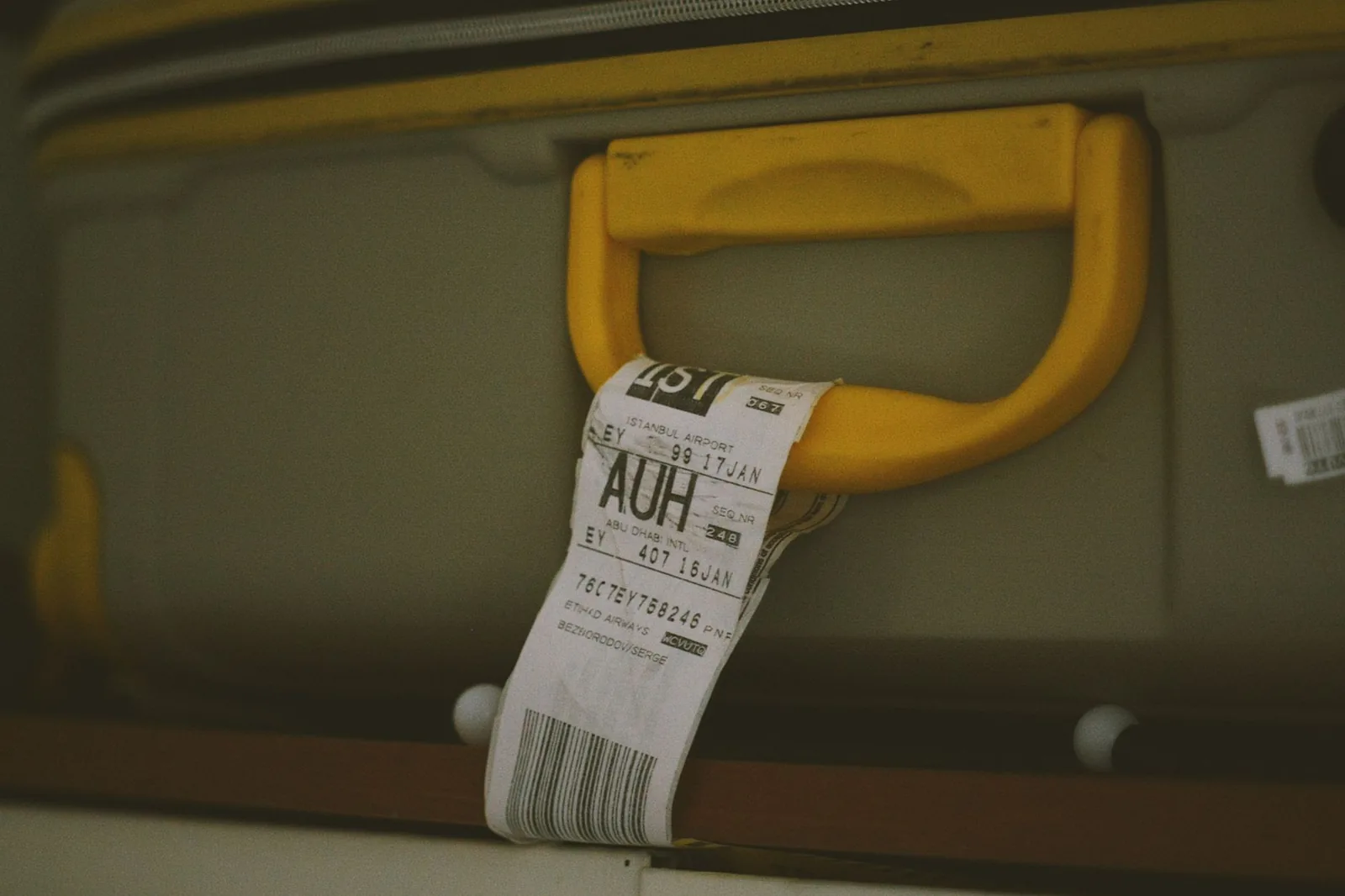
Photo by Sergei Bezborodov via Pexels
Weight Limits You’ll Actually Face
If size is the quiet problem, weight is the loud one. Many US travelers have never had a carry-on weighed; on international routes it happens all the time.
The 7 kg (15 lb) cap is the number to plan around, because it’s the most common on Asian and Middle Eastern carriers and because it’s shockingly easy to exceed. A 15-inch laptop, its charger, a tablet, and a power bank can eat 3 kg by themselves. Add a packed bag and a jacket and you’re at 8 kg before you remember your shoes.
Strategies that genuinely help:
- Wear the heavy stuff. Hiking boots, jeans, and a jacket go on your body, not in the bag.
- Choose a light bag. A softside like the Travelpro Maxlite 5 weighs about 2.5 kg; some hardshells weigh 4 kg or more. That difference is half your weight budget.
- Check the limit before you book. Lufthansa allows 8 kg, British Airways 23 kg, Ryanair Priority 10 kg. The same bag passes on one airline and fails on the next.
- Weigh at home. A $10 luggage scale removes every surprise at the counter.
For the full numbers by carrier, see our carry-on luggage weight limit guide.
Hardshell vs. Softside: What to Choose
Both styles work, and the “right” answer depends on where you’re flying and how you pack.
Hardshell (polycarbonate or ABS) protects electronics and fragile items and shrugs off rain, but it weighs more and doesn’t compress. That weight matters most on 7 kg airlines, and the rigid shell makes it harder to squeeze into an airline’s sizing frame. Popular picks like the Away Carry-On (about $275) and Monos Carry-On Pro ($295) are superb on US carriers but can feel heavy once a Middle Eastern airline weighs them.
Softside is lighter, more forgiving at the sizer, and typically cheaper. The Travelpro Maxlite 5 (about $130-$160) is the long-running favorite of flight crews for exactly these reasons, and it has outside pockets that hardshells lack. The trade-off is less crush protection for a laptop or camera.
A travel backpack is the third option and, for many people, the best one for international trips with multiple flights, trains, and cobblestone streets. The Osprey Farpoint 40 and Cotopaxi Allpa 35L sit in the 35-40 liter range, open flat like a suitcase, and fit most overhead bins. They also leave your hands free and never have a wheel break. Our best travel backpack roundup compares the top models.
If you’re still torn between going carry-on and checking a bag at all, our carry-on luggage vs checked luggage guide runs the numbers for both short and long trips.
Photo by Yazid N via Pexels
What to Pack (and What to Leave Home)
A carry-on forces discipline, which is exactly the point. Here’s the core list for a one-week international trip:
- Bottoms: 2 pairs of pants (one worn), plus one pair of shorts or a skirt.
- Tops: 4-5 shirts that mix and match in one or two colors.
- Layers: 1 lightweight sweater or fleece, 1 packable rain shell.
- Underwear and socks: 5-7 pairs each; these pack flat and are worth the space.
- Shoes: 2 pairs maximum, including the ones you wear. Bulky sneakers go on your feet.
- Toiletries: travel-size only — TSA’s 3-1-1 rule caps liquids at 3.4 oz (100 ml) per container in a single quart-size clear bag.
- Electronics: phone, chargers, a universal plug adapter, and a small power bank (which must go in the cabin, never in checked luggage).
- Documents: passport, boarding pass, and a printed copy of your reservation as backup.
Leave behind anything you can buy for a few dollars at the destination: full-size shampoo, beach towels, and “just in case” outfits. Every hotel, hostel, and corner shop in Europe sells soap.
Packing Tips to Fit a Week in One Bag
The single most effective technique is a packing cube system. Cubes compress clothes and turn your bag into a tidy set of drawers, so you can find a shirt without emptying everything onto a hostel bed. A set of three costs about $20 to $35.
Roll your clothes rather than folding them; rolled items pack tighter and wrinkle less. Put heavy items (shoes, toiletries, power adapter) at the bottom near the wheels so the bag doesn’t tip over, and stash the clothes you’ll need first on top.
Keep a small “day bag” as your personal item. Most airlines allow an under-seat item of roughly 40 x 30 x 15 cm in addition to the main carry-on, and this is where your passport, wallet, headphones, and one change of clothes belong — so even if the main bag gets gate-checked, the essentials stay with you.
Finally, do a test pack two days before you fly. Walk around the block with the bag loaded. If it’s already uncomfortable at home, it won’t improve after 12 hours of transit.
Frequently Asked Questions
What size carry-on is allowed on international flights?
It varies by airline, but the safest universal target is 55 x 40 x 20 cm (about 21.7 x 15.7 x 7.9 inches). A bag this size fits the sizers for Emirates, Lufthansa, Ryanair, and most full-service carriers. US-sized bags at 22 x 14 x 9 inches are too deep for several budget European airlines.
Is there a weight limit for carry-on luggage on international flights?
Yes, and it’s often lower than Americans expect. Many Asian and Middle Eastern carriers cap cabin bags at 7 kg (15 lb), while European full-service airlines typically allow 8 kg. Budget carriers such as Ryanair permit 10 kg with their Priority option, and British Airways is unusually generous at 23 kg.
Can I bring a personal item in addition to my carry-on?
On almost every airline, yes. Most allow one under-seat personal item — a backpack, purse, or briefcase — usually up to about 40 x 30 x 15 cm. Keep your passport, medication, and a change of clothes here in case the main bag is gate-checked.
Do liquids rules apply to carry-on luggage on international flights?
Yes. The 3-1-1 rule applies at US and many international checkpoints: containers of 3.4 oz (100 ml) or less, all fitting inside one clear quart-size bag. Full-size toiletries must go in checked luggage or be bought at your destination.
Is a backpack better than a wheeled bag for international travel?
For multi-leg trips with trains, ferries, and uneven streets, a 35-40 liter travel backpack is often easier than a wheeled bag. Wheeled carry-ons win on smooth airport floors and for anyone who dislikes carrying weight on their back. Both are valid — match the bag to the trip.
The Bottom Line
Carry on luggage for international travel pays for itself in fees saved, time saved, and the peace of mind of knowing your bag can’t be lost. The rules are strict, but they’re not a secret: plan around a bag of roughly 55 x 40 x 20 cm, keep the weight under 7 kg if you’re flying Asian or Middle Eastern carriers, and let a packing cube do the compressing for you.
Check your airline’s exact limits before you book — the airline’s own baggage page is the only source that matters, and resources like The Points Guy’s carry-on rules guide keep a current comparison of major carriers. And if you want a deeper look at which specific bags earn their price tag, our best carry-on luggage for travel guide ranks the top picks for every budget.
Pack light, pack once, and spend your energy on the trip instead of the airport.