
Packing Cubes for Travel: A Practical Guide to Smarter Suitcases
Packing cubes for travel are the single most useful luggage accessory most people still skip. They turn a chaotic pile of clothes into a set of neat, labeled blocks you can pull straight out of your suitcase, and they genuinely save space in the process. If you have ever unzipped your bag at a hotel and found a wrinkled mess, cubes fix that in about ten seconds.
A good set costs between $20 and $50, fits in any carry-on or checked bag, and lasts for years. You do not need to be a frequent flyer to get value out of them, either. A single week-long trip is usually enough to make you wonder why you packed without them for so long.
Why Packing Cubes for Travel Actually Work
The core idea is simple: instead of packing loose clothes, you organize them into zippered fabric containers that sit inside your luggage. That structure does three practical jobs at once.
First, cubes compress soft items like t-shirts, underwear, and socks down to a fraction of their loose volume. The zipper forces fabric to flatten, which means fewer air pockets between layers. In a carry-on with a hard 22 x 14 x 9 inch limit, that extra room matters more than you would think.
Second, they keep your bag organized for the entire trip. You know exactly which cube holds socks and which holds shirts, so you are not digging through every layer to find one pair of shorts. When you get to a hotel, you lift the cubes out and set them in drawers or on shelves without unpacking everything.
Third, they reduce wrinkles and make repacking fast. Folded clothes stay in place inside a cube rather than sliding around and crumpling. At the end of the trip, you just zip everything back into the same cubes and drop them in.
Experienced one-bag travelers swear by them for a reason. Tom Bihn, Thule, and Eagle Creek all sell their own versions, and each has spent years refining the same basic concept because it simply works.
How to Choose the Right Sizes and Materials
Not all cubes are the same. The differences come down to three things: fabric, zipper quality, and the set of sizes included. Get these right and a $25 set can outperform a $60 one.
Most cubes use ripstop nylon or polyester. Ripstop nylon is lighter and slides more easily against other clothes, which helps when you are squeezing a full set into a tight suitcase. Polyester is usually cheaper and slightly stiffer. Either is fine, but look for a fabric weight of 210D or higher for the shell so the seams do not tear at the zipper.
Zipper quality matters more than any other feature. Cheaper sets use thin coil zippers that snag on fabric and eventually split. Brands like Eagle Creek and Thule use durable YKK-style zippers, and that is the first thing worth paying extra for.
Here is how a few well-known sets compare:
| Feature | Eagle Creek Pack-It | Thule Compression | Calpak 5-Set |
|---|---|---|---|
| Shell fabric | 300D ripstop nylon | Nylon, water-resistant | Durable polyester |
| Set contents | 3-6 cubes | 2-4 cubes | 5 cubes |
| Compression zipper | No (separate line) | Yes | No |
| Approx. price | $35-$70 | $45-$65 | $30-$65 |
| Best for | Organization, durability | Maximum compression | Budget, mixed sizes |
For a first set, pick one that includes at least one large, two medium, and two small cubes. The small ones handle socks, underwear, and cables; the medium ones hold shirts and shorts; the large one takes pants, sweaters, or a week of outfits.
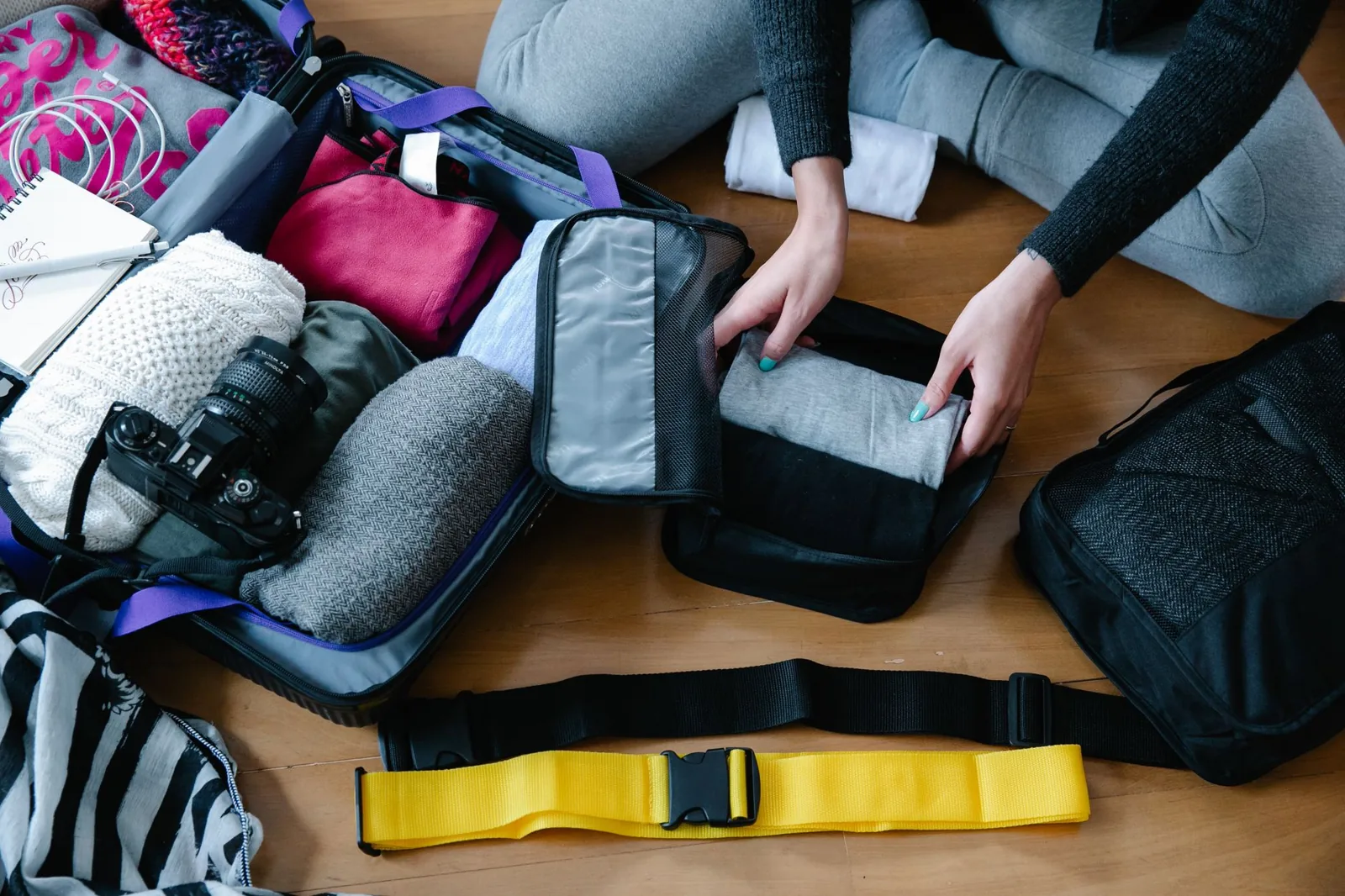
Photo by Timur Weber via Pexels
The Best Way to Pack Cubes for Maximum Space
How you fill the cube matters as much as which cube you buy. A cube stuffed with loosely wadded clothes wastes half its potential.
Roll, Don’t Fold
Rolling clothes before they go into the cube is the most reliable way to save space. Tight rolls remove air and let you pack more items per cube. This is the method flight attendants and frequent business travelers default to, and it works especially well for t-shirts, underwear, and casual pants.
Fill to the Corners
Start at the edges and work inward. Flat items like jeans and sweaters go in first, laid against the cube walls, with rolled items filling the middle. This stops the cube from bulging into a rounded ball that is hard to zip and harder to stack.
Zip Slowly and Squeeze
Once the cube is full, close the zipper a little at a time while pressing down on the contents. The compression happens in that final zip, not before it. If the zipper will not close, you overfilled it — remove one item rather than forcing it.
Stack Cubes Like Bricks
In your suitcase, lay the large cube flat first, then stack medium and small cubes on top. Keep heavy items at the bottom and toward the wheel side of the bag so the suitcase does not tip when you stand it up. This matters more on spinner bags, where weight distribution affects how they roll.
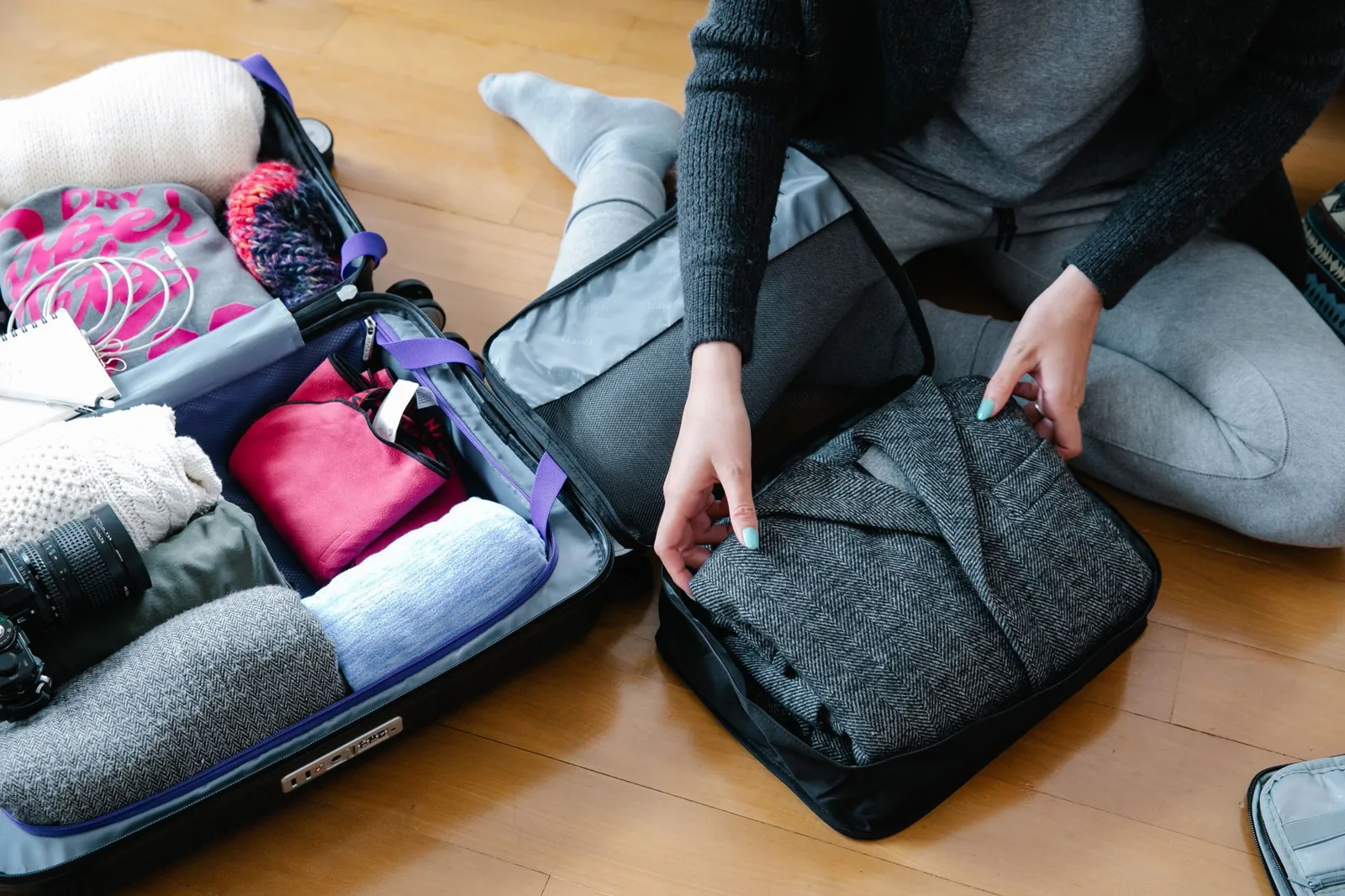
Photo by Timur Weber via Pexels
Packing Cubes vs. Compression Cubes: What’s the Difference
Compression cubes look almost identical to standard cubes but add a second zipper that cinches the whole cube down, squeezing out even more air. That extra zipper can reduce volume by roughly 15 to 25 percent, which is the difference between fitting a heavy sweater or leaving it behind.
The trade-off is weight and wrinkles. Compression cubes are slightly heavier because of the extra zipper and reinforcement, and over-compressing can crease cotton and linen. For bulky, wrinkle-resistant items like jackets, fleece, and jeans, compression is a clear win. For dress shirts and blazers, a standard cube with careful folding is the safer choice.
Most travelers get the best of both by buying a set that mixes the two. Keep one or two compression cubes for bulky layers and use standard cubes for everything else. Thule, Eagle Creek, and Tripped all sell mixed sets built around exactly this approach.
Common Mistakes That Waste Space
Even people who own cubes use them poorly. These are the errors that undo most of the benefit.
- Buying cubes that are too large for the bag. A cube should never be wider than the suitcase it goes into. Measure your bag’s interior before buying, especially for carry-ons, where a cube over about 17 inches wide will not lie flat.
- Overfilling every cube. A cube packed to the point of bulging is harder to zip, harder to stack, and prone to tearing at the seams. Leave a little slack.
- Packing cubes for the sake of it. Not everything belongs in a cube. Shoes, toiletry bags, and laptops should stay in their own compartments or sleeves.
- Ignoring weight limits. Cubes make it easy to pack more, which is exactly how travelers blow past airline weight limits. A checked bag on Delta or American tops out at 50 pounds (23 kg), and a full set of over-packed cubes will hit that faster than you expect.
- Buying sets with too few sizes. A three-cube set limits you. A five- or six-piece set gives you the flexibility to separate clean clothes from dirty ones mid-trip.
Frequently Asked Questions
Do packing cubes actually save space?
Yes, but mostly through organization and mild compression. Standard cubes remove the air pockets between loose clothes, and compression cubes go further by physically squeezing contents down. The space savings are real but modest — usually enough to fit a few extra items, not an entire second wardrobe.
What size packing cubes should I get?
For a carry-on, a set with one large (about 17 x 12 x 3.5 inches), two medium (about 14 x 10 x 3 inches), and two small (about 11 x 7 x 3 inches) cubes covers almost every packing scenario. For a checked bag, add one extra-large cube for pants and jackets.
Are packing cubes allowed in carry-on luggage?
Yes. Packing cubes are not liquids, and there is no rule against them. Just make sure your full bag still fits the airline’s size limits, which typically run 22 x 14 x 9 inches for US carriers. Our guide to carry-on luggage size breaks down the exact limits by airline.
Do packing cubes prevent wrinkles?
They help, but they are not magic. Folded or rolled clothes that stay put wrinkle less than loose clothes that slide around. For wrinkle-prone fabrics, roll tightly and unpack on arrival rather than leaving clothes compressed for days.
Are expensive packing cubes worth it?
Sometimes. A $25 set with sturdy zippers and 210D fabric will do the job for years. Pay more only if you want lighter ripstop nylon, compression zippers, or a specific brand’s warranty. Eagle Creek and Thule are worth the premium if you travel monthly.
How many packing cubes do I need?
For most one- to two-week trips, four to six cubes is the sweet spot. That covers tops, bottoms, underwear and socks, plus one spare for dirty clothes or shoes. A matching set keeps everything uniform and easy to stack.
The Bottom Line
Packing cubes for travel are a small investment with an outsized payoff. For $20 to $50, you get a suitcase that stays organized from the first day of a trip to the last, fewer wrinkles, and noticeably more usable space. The habits that make them work — rolling, filling corners, stacking by weight — take a few minutes to learn and stick with you forever.
Start with a mixed set that includes at least five cubes in different sizes, and add a compression cube or two if you regularly pack bulky layers. Pair the cubes with a well-sized bag, and check our guide to carry-on luggage dimensions before you buy anything. If you are still deciding which bag to fill, the best carry-on luggage for travel walks through the top options for every budget.
For more on packing light and the rules that govern what you can bring, the packing advice at Lonely Planet and the carry-on guides at NerdWallet are both worth a read.