How to Pack a Carry-On Bag: A Step-by-Step Guide
Learning how to pack a carry on bag well is the single most useful travel skill you can build. It saves you money on checked-bag fees, keeps your stuff from getting lost in a connection, and gets you out of the airport while everyone else is still circling the baggage carousel. The trick is not willpower — it’s a system.
Most people overpack because they don’t have a plan. They toss in “just in case” items, fold things poorly, and end up checking a bag that’s only two-thirds full of things they actually used. Pack strategically and that same carry-on holds a week’s worth of clothing, your electronics, and a pair of shoes, all under the weight limit.
Here’s the exact method I use, refined over hundreds of flights, so you can stop guessing and start packing smarter.
Start With the Right Bag
Before you fold a single shirt, make sure your bag will actually make it into the overhead bin. Airlines are not consistent about this, and “carry-on approved” on a product listing doesn’t always match what a gate agent will allow.
Check our guide to carry-on luggage size for a full rundown, but the numbers that matter for most US carriers are 22 x 14 x 9 inches including wheels and handles. That’s the standard for United, Delta, and American. If your bag is bigger than that, you’re gambling on an empty flight and a lenient agent.
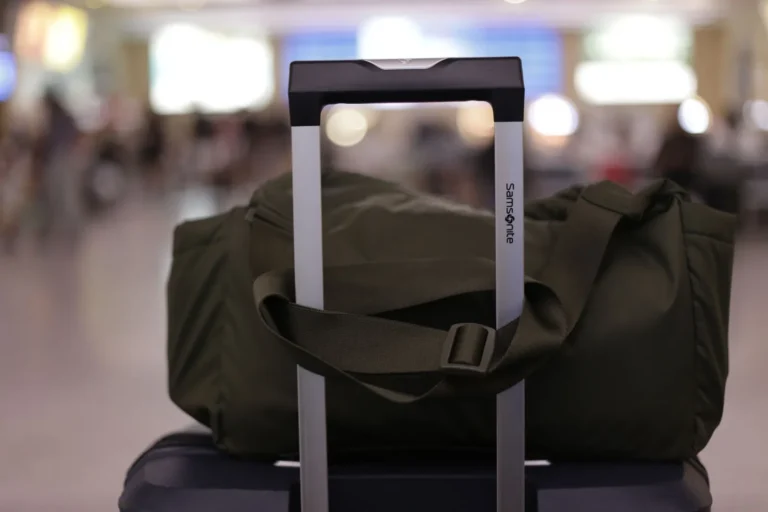
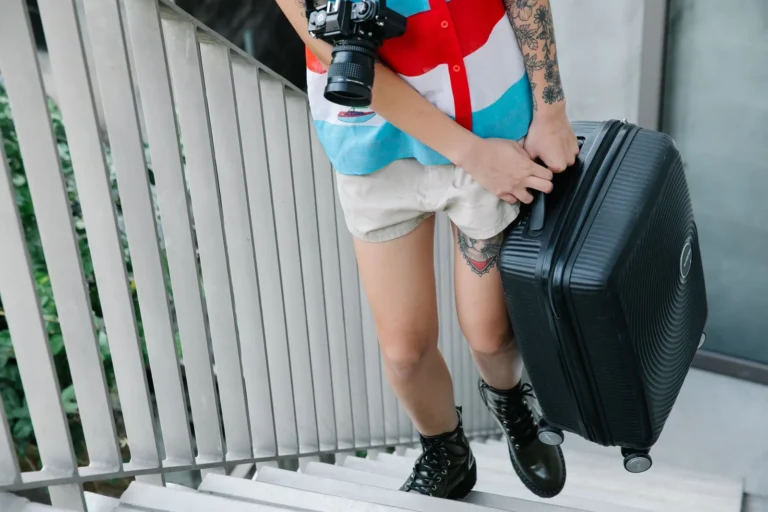
Soft-sided bags with an expansion zipper are a trap for overpackers. A hardshell spinner with four wheels keeps you honest about volume and rolls smoothly through the airport. You don’t need to spend a fortune — a 20-inch hardshell from AmazonBasics or Samsonite’s Omni PC line costs $100 to $160 and will survive years of abuse. Our carry-on luggage dimensions guide breaks down exactly how to measure your bag so there are no surprises at the gate.
Also think about how you’ll carry it. A bag with a padded laptop sleeve and an external pocket for your boarding pass means you won’t have to open the main compartment at security. That alone saves you ten minutes per trip.
Know Your Airline’s Limits Before You Pack
Different airlines, different rules — and the penalties for getting it wrong are real. A full-size carry-on on Spirit or Frontier can cost $40 to $65 each way if you didn’t buy it up front. A bag that’s 2 pounds over the limit on Lufthansa could force you to check it at the gate, which means waiting at baggage claim in a foreign airport.
Here’s what to expect across major carriers:
- US majors (United, Delta, American): 22 x 14 x 9 in carry-on; most don’t weigh domestic carry-ons, but they’ll gate-check you if bins are full.
- Budget US carriers (Spirit, Frontier, Allegiant): free personal item up to 18 x 14 x 8 in; carry-on costs extra unless you buy a bundle.
- Lufthansa: 8 kg (17.6 lb) carry-on weight limit, 55 x 40 x 23 cm.
- Air France/KLM: 12 kg (26.4 lb) combined, 55 x 35 x 25 cm.
- Emirates: 7 kg (15.4 lb) in economy — one of the strictest in the sky.
- Ryanair: 10 kg bag only if you paid for priority; otherwise personal item only.
The lesson is simple: always verify your specific route’s rules before you pack. Our guide to the carry-on luggage weight limit covers the numbers in detail, including which airlines actually enforce them.
Photo by Liam Moore via Pexels
The Packing Method That Actually Works
Forget rolling-versus-folding debates as an either/or choice. The real answer is that different items need different treatments, and packing cubes do the heavy lifting. Here’s how the four approaches compare:
| Feature | Flat Folding | Rolling | Packing Cubes | Compression Cubes |
|---|---|---|---|---|
| Space efficiency | Low | Medium | High | Highest |
| Wrinkle prevention | Good | Good for knits | Good | Good |
| Organization | Poor | Poor | Excellent | Excellent |
| Speed to find items | Slow | Slow | Fast | Fast |
| Best for | Dress shirts, blazers | T-shirts, jeans | Everything | Bulky layers |
Roll t-shirts, underwear, and jeans — rolling squeezes out air and fits awkward corners of the bag. Fold button-down shirts and blazers flat on top where nothing will crush them. Packing cubes (Eagle Creek and Gonex are both solid, roughly $25 for a three-piece set) keep each category separate, so you can pull out the “toiletries” cube without unpacking your entire life at a hostel.
If you’re fighting a strict weight limit, skip vacuum bags. They save volume but add zero weight savings and can’t be resealed for the trip home. Compression cubes give you most of the space benefit while staying reusable.
Layer Your Bag From Bottom to Top
Think of your carry-on like a lasagna. Each layer has a job, and the order matters more than you’d think.
- Bottom layer: shoes and jeans. Shoes go in a plastic bag or shoe bag, soles facing outward toward the wheel side of the suitcase so nothing gets dirty. Stuff socks and underwear inside your shoes to reclaim dead space.
- Middle layer: your rolled clothing and cubes. Pack them vertically if you have a clamshell bag so you can see everything at once, like a filing cabinet.
- Top layer: flat-folded shirts, a blazer, and anything you’ll need quickly — a light jacket, a book, your chargers.
- Outer pockets: passport, boarding pass, earbuds, a pen for customs forms.
Aim for no more than two pairs of shoes total, including the ones you wear. Shoes are the single biggest space hogs in any bag, and you can almost always buy an extra pair on the road cheaper than the fee to check a bag.
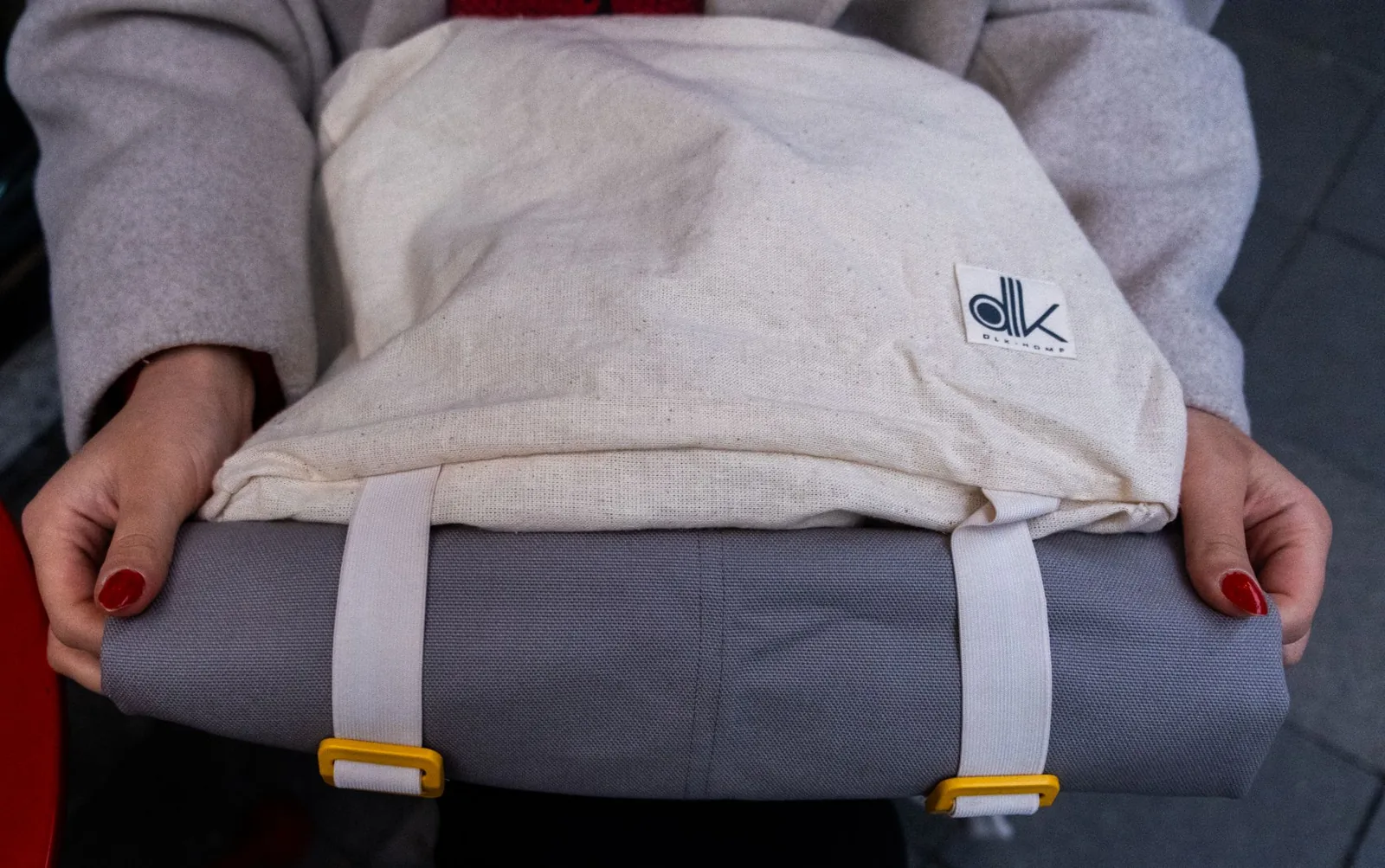
Photo by Yasin Kocetepe via Pexels
Liquids, Electronics, and the TSA Game
Security is where most packing plans fall apart. The TSA’s 3-1-1 rule is non-negotiable: liquids, gels, and aerosols must be 3.4 ounces (100 ml) or less each, all fitting in one quart-sized clear bag, one bag per passenger.
Buy reusable travel bottles rather than bringing half-empty full-size products. Most solid alternatives skip the rules entirely — solid shampoo bars, stick deodorant, and powdered face wash don’t count as liquids. A bar of Dr. Bronner’s soap can replace your shampoo, body wash, and even laundry detergent for under $5.
For electronics, keep your laptop and tablet in a spot you can reach without dumping the bag. If you fly often, TSA PreCheck ($78 for five years) lets you leave your laptop and liquids inside the bag and keep your shoes on. It’s the cheapest time-saver in air travel if you fly more than twice a year.
Charge your power bank before you leave — airlines require them in carry-on (never checked), and a dead battery is useless when your phone dies mid-connection. Keep one in the outer pocket, since security officers occasionally ask you to remove it.
What to Wear Instead of Pack
Your heaviest items should be on your body, not in your bag. If you’re traveling somewhere cold, wear your bulkiest layer — the coat, the boots, the sweater — onto the plane. You can always shed layers once you’re seated.
Plan your clothing in a single color palette so every top works with every bottom. Three bottoms, six tops, and one mid-layer in coordinating colors creates roughly 18 outfits in a fraction of the space that a random pile would take. Merino wool t-shirts and socks are worth the splurge because you can wear them two or three times before they need washing, which means you pack half as many.
For shoes, the three-shoe rule covers almost every trip: a comfortable walking pair (worn), a nicer pair for dinners, and flip-flops or sandals for the beach or hostel showers. Anything beyond that is luggage you’ll regret hauling.
How to Pack a Carry-On Bag for International Travel
International flights are where packing discipline really pays off, because the weight limits are lower and the connections are tighter. A 7 kg limit like Emirates’ leaves almost no room for error — your empty hardshell bag already weighs 6 to 8 pounds before you put anything in it.
Choose a lighter bag for international trips. A 5-pound soft-sided bag gives you nearly 3 extra pounds of usable capacity versus a heavy hardshell, and that can be the difference between carrying on and checking. Our carry-on luggage for international travel guide covers the best lightweight options and which airlines to watch out for.
Pack a change of clothes and your toiletries in your personal item, not your carry-on. If the airline gate-checks your roller on a full international flight, you still have clean underwear, a toothbrush, and your meds when your bag goes to the cargo hold. Prescription medication should never go in a checked bag, ever.
Frequently Asked Questions
Can I bring a carry-on bag and a personal item?
On most US carriers, yes — one carry-on plus one personal item (backpack, purse, or laptop bag) that fits under the seat. Budget carriers like Spirit and Frontier only include the personal item in the base fare, so check before you book.
How many days of clothes fit in a carry-on bag?
With packing cubes and rolling, a standard 22-inch carry-on holds 5 to 7 days of clothing comfortably. Add merino wool and a laundry plan, and you can stretch a single carry-on indefinitely — many long-term travelers travel for months with one bag.
Is rolling or folding better for packing?
It depends on the fabric. Rolling works best for casual knits like t-shirts, jeans, and athletic wear. Folding is better for structured items like dress shirts and blazers, which wrinkle less when laid flat on top of everything else.
Do airlines weigh carry-on bags?
It varies. US domestic carriers rarely weigh carry-ons, but most international airlines do, with limits from 7 kg to 12 kg in economy. Budget carriers are also more likely to measure both size and weight at the gate.
What should never go in a checked bag?
Passport, medications, electronics with lithium batteries, jewelry, cash, and anything you can’t replace. Power banks must go in carry-on by regulation, and prescription meds belong with you at all times.
The Bottom Line
Knowing how to pack a carry on bag is a skill that pays for itself on the first trip. Choose a bag that fits the strictest airline on your route, use packing cubes to stay organized, roll your casual clothes, and wear your heaviest layers onto the plane. Stick to one color palette, follow the 3-1-1 rule, and keep your essentials in a personal item that never leaves your side.
Start with the right carry-on size, check your airline’s weight limits before you zip anything, and follow this system every time. The next time you walk past the baggage claim and straight to the taxi, you’ll wonder why you ever checked a bag in the first place.