
Carry On Luggage vs Checked Luggage: Which Is Right for Your Next Trip?
The carry on luggage vs checked luggage decision is one every traveler faces the moment they start packing. Do you squeeze a week’s worth of clothes into a 22-inch roller and hope the overhead bin has room, or pay $35 to check a bag and risk watching it disappear on the carousel at 1 a.m.? There is no single right answer, but there is a right answer for your trip — and it usually comes down to three things: cost, convenience, and how much you actually need.
Most airlines now charge for checked bags on domestic US routes, which has pushed millions of travelers toward carry-on-only packing. At the same time, basic economy fares have tightened the rules, and cabin bins on full flights fill fast. Understanding the trade-offs before you book can save you real money and a lot of stress.
Here’s a direct, no-nonsense comparison of carry on luggage vs checked luggage — what it costs, what fits, what you’re allowed to pack, and which one wins for different kinds of travel.
The Real Differences Between the Two
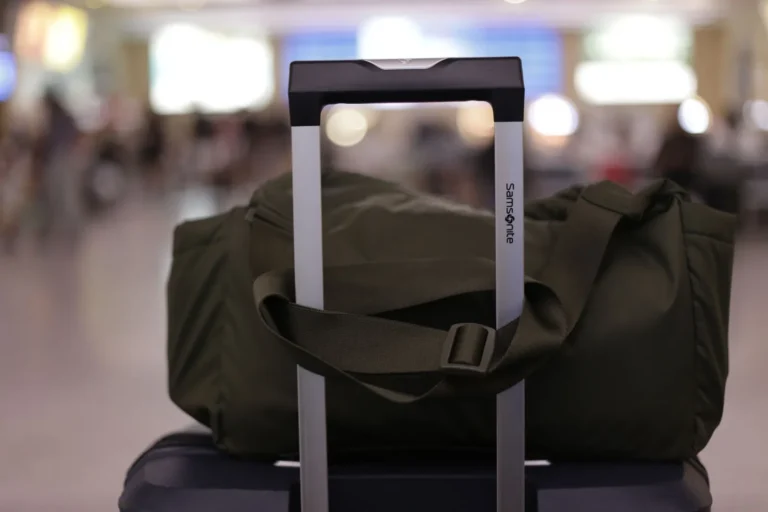
At the simplest level, carry-on luggage is the bag you keep with you and bring into the cabin, while checked luggage is handed over at the ticket counter or baggage drop and stored in the plane’s cargo hold. That one logistical difference ripples into everything else: what you pay, how long you wait, what you can pack, and how big the bag can be.
Carry-on bags are small and strictly regulated. On most US airlines, a standard carry-on measures 22 x 14 x 9 inches, including handles and wheels. Checked bags run much larger — commonly up to 62 linear inches (length + width + height) — and typically weigh up to 50 pounds before overweight fees kick in. You can find the exact numbers in our guide to carry on luggage dimensions.
The practical gap is enormous. A 22-inch roller holds roughly 35 to 45 liters, or about three to five days of clothing for a light packer. A large checked suitcase can hold two to three times that, plus bulky items like boots, coats, and gifts.
How Size Limits Shape the Carry On vs Checked Luggage Decision
Before you commit to a carry-on, measure it. Airlines enforce size limits with a metal sizer at the gate, and the fees for a “gate-checked” bag are often higher than paying to check it online. For specifics, see our breakdown of carry on luggage size rules.
Standard Domestic Carry-On Dimensions
Most major US carriers use roughly the same carry-on spec:
- American Airlines: 22 x 14 x 9 in
- Delta: 22 x 14 x 9 in
- United: 22 x 14 x 9 in
- JetBlue: 22 x 14 x 9 in
- Southwest: 24 x 16 x 10 in (slightly larger)
International and budget carriers are often stricter. Ryanair’s included bag runs about 40 x 20 x 25 cm, and many low-cost lines enforce it aggressively at the gate.
What Counts as a Personal Item
Every airline allows one “personal item” in addition to your carry-on — a purse, laptop bag, or small backpack that fits under the seat in front of you, generally around 18 x 14 x 8 inches. Smart packers treat the personal item as free extra capacity. A well-chosen best travel backpack can hold a laptop, chargers, a change of clothes, and your toiletries, effectively adding 20+ liters to your total.
The Cost: A Straight Comparison
Checked baggage fees are where most of the money lives. The first checked bag on a domestic US flight typically costs $35 to $40 each way, and a second bag runs $45 to $50. On round trips, one checked bag can add $70 to $90 to your fare — per person.
Here’s how the two stack up:
| Feature | Carry-On Only | Checked Bag |
|---|---|---|
| Typical first-bag fee | $0 (included) | $35–$40 each way |
| Second bag | N/A | $45–$50 each way |
| Overweight fee (>50 lb) | N/A | $100–$200 |
| Size limit | 22 x 14 x 9 in | 62 linear inches |
| Weight limit (US) | No official limit | 50 lb standard |
| Liquids over 3.4 oz | Not allowed | Allowed |
The numbers add up quickly for families. A family of four who checks one bag each way on a domestic trip can spend $280 to $320 on bag fees alone — before counting overweight charges. Carry-on-only packing eliminates that line item entirely.
That said, if you fly Southwest, your first two checked bags are free — a genuine differentiator among US carriers. Many premium credit cards (Chase, Amex, Capital One) also waive first checked bag fees on eligible airline purchases, though you usually have to book directly with the airline.
Time and Convenience at the Airport
Time is the second big factor in the carry on luggage vs checked luggage trade-off. With carry-on only, you can check in on your phone, walk straight to security, and head to your gate. When you land, you walk off the plane and out of the airport.
With a checked bag, you add two waiting periods: the baggage drop line before security and the carousel after landing. According to research cited by travel sites including NerdWallet, average carousel wait times run 10 to 30 minutes, and can stretch far longer on international arrivals or when a connecting bag misses its flight.
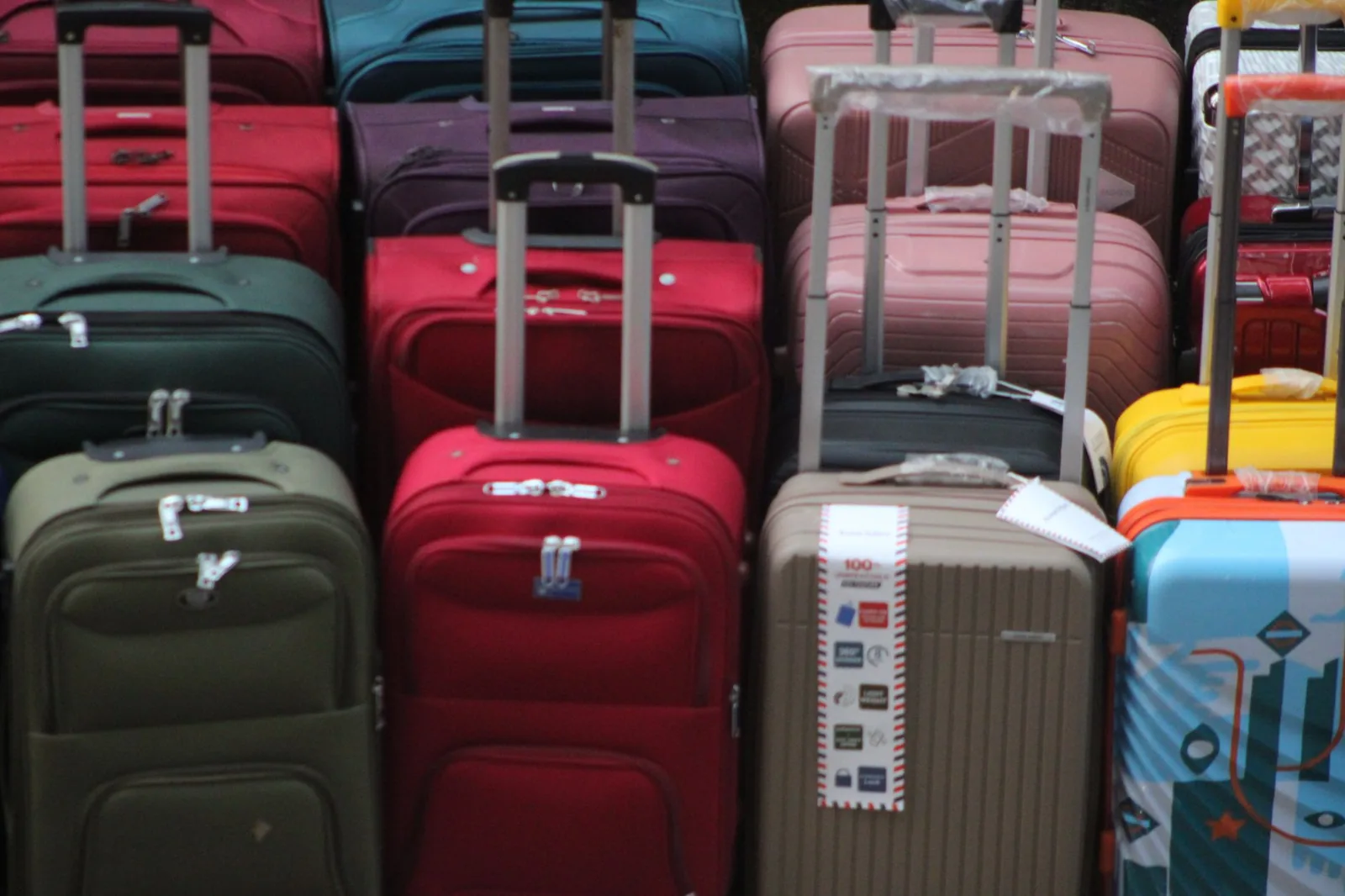
Photo by Jahra Tasfia Reza via Pexels
Then there’s the risk. The US Department of Transportation reports that mishandled baggage rates have stayed relatively low — around 3 to 7 bags per 1,000 passengers in recent years — but when it happens, it can wreck a trip. A lost bag means shopping for essentials, waiting on delivery, and filing claims. Carry-on bags don’t get lost because they never leave your side.
What You Can and Can’t Pack
TSA rules draw a hard line between the two, and it mostly comes down to liquids. In a carry-on, all liquids, gels, and aerosols must be in containers of 3.4 ounces (100 ml) or less, all fitting inside a single quart-size clear bag. In a checked bag, you can pack full-size shampoo, sunscreen, and other liquids without restriction.
The flip side is that certain items must go in carry-on luggage. Spare lithium-ion batteries, power banks, and e-cigarettes are banned from checked luggage because of fire risk. Medication, passports, jewelry, and anything you can’t afford to lose should stay with you too.
For longer trips where toiletries and bulkier gear matter, checked luggage wins on packing freedom; for safety of valuables, carry-on wins every time.
When Checked Luggage Makes More Sense
Carry-on-only is popular, but there are trips where a checked bag is clearly the better call:
- Trips longer than 7–10 days. Clothes simply don’t compress indefinitely, though see our tips on carry on luggage for international travel if you want to attempt it.
- Cold-weather destinations. Bulk sweaters, boots, and coats eat carry-on capacity fast.
- Traveling with families. Kids come with strollers, car seats, and more gear than any roller can hold.
- Bringing gifts or souvenirs home. You need room and the ability to check liquids like local wine or liquor.
- Specialty gear. Checked bags let you transport items you can’t carry on, from full-size toiletries to tent poles and fishing gear.
- Basic economy without guarantees. Some basic economy fares don’t include a full-size carry-on, only a personal item, so checking may be unavoidable.

Photo by Andrea Piacquadio via Pexels
For travelers who fly frequently and check consistently, a dedicated checked bag like a durable hard-side spinner with a built-in TSA-approved lock is worth the investment. For those who want to skip the whole debate by packing light, our roundup of the best carry on luggage for travel covers models that maximize every inch.
Frequently Asked Questions
Is it cheaper to fly with carry-on luggage only?
Yes, almost always. Most US airlines charge $35 to $40 for a first checked bag each way, while carry-on bags are free on standard fares. On a round trip, packing carry-on-only saves you $70 to $90 per person.
What is the standard carry-on luggage size?
On major US airlines, the standard carry-on measures 22 x 14 x 9 inches, including wheels and handles. Southwest allows a slightly larger 24 x 16 x 10 inches. Budget and international carriers often enforce smaller limits.
Can I bring liquids in a checked bag?
Yes. The TSA 3.4-ounce (100 ml) rule applies only to carry-on luggage. Checked bags can contain full-size liquids, gels, and aerosols. Battery packs and spare lithium-ion batteries, however, must stay in your carry-on.
How likely is my checked bag to get lost?
Low but not zero. Mishandled baggage rates run roughly 3 to 7 bags per 1,000 passengers in the US, higher during travel peaks and when connections are tight. Carry-on luggage avoids this risk entirely.
Does carry-on luggage have a weight limit?
Most US airlines set no strict carry-on weight limit, unlike many international and budget carriers, which cap carry-on weight between 7 and 15 kg (15 to 33 lb). If your bag is too heavy for you to lift into the overhead bin, it’s too heavy regardless.
The Bottom Line
The carry on luggage vs checked luggage question really comes down to trip length, cost tolerance, and how much risk you can absorb. For most trips under a week on domestic routes, carry-on-only is cheaper, faster, and safer — you skip bag fees, skip the carousel, and keep everything you care about within reach.
Checked luggage earns its fee on long trips, cold-weather getaways, family travel, and any journey where you need to bring home more than you took. If you do check, weigh the bag before you leave home to dodge the $100-plus overweight fee, and consider an airline that waives fees.
Whichever you choose, the goal is the same: arrive with what you need, without paying more than the trip is worth. Pack deliberately, know your airline’s rules, and the airport will be a lot less stressful either way.