
Travel Trailer vs Fifth Wheel: Which RV Is Right for You?
The travel trailer vs fifth wheel decision is the biggest fork in the road for anyone shopping for a towable RV. Both hitch to a truck, both give you a rolling home, and both beat a motorhome on price — but they tow, handle, and live very differently. Pick the wrong one and you could end up over your truck’s limits, cramped for years, or paying for square footage you never use.
This guide breaks down the real differences — cost, towing requirements, interior space, and day-to-day livability — so you can choose the one that fits your truck, your budget, and the way you actually travel.
The Key Differences at a Glance
A travel trailer hitches to a ball mount at the rear of your tow vehicle. A fifth wheel hitches to a special hitch mounted in the bed of a pickup truck, directly over the rear axle. That single difference ripples through everything else: weight capacity, stability, ceiling height, and how much truck you need.
| Feature | Travel Trailer | Fifth Wheel |
|---|---|---|
| Hitch location | Rear bumper ball mount | In-bed fifth wheel hitch |
| Typical length | 13–36 ft | 22–45 ft |
| Typical weight | 2,000–10,000+ lb | 10,000–20,000+ lb |
| Tow vehicle | Mid-size or full-size SUV/truck | 3/4-ton or 1-ton truck |
| Starting price (new) | $15,000–$35,000 | $45,000–$90,000 |
| Interior ceiling | Standard height throughout | Raised front “gooseneck” bedroom |
| Best for | First-timers, smaller budgets, occasional use | Full-timers, families, long stays |
Setup, Hitching, and Everyday Ease
Travel Trailers: Simpler, But Less Forgiving
A travel trailer is the friendlier entry point. The hitch setup is a standard ball mount and weight-distribution hitch, which means you can tow with more vehicles — including half-ton trucks like a Ford F-150, Chevy Silverado 1500, or even a properly equipped Toyota Tundra. Many smaller models under 5,000 lb will also sit comfortably behind mid-size SUVs such as the Toyota 4Runner or Jeep Grand Cherokee.
Hitching is straightforward but comes with a learning curve. You back up to the coupler, lower it onto the ball, latch the safety pin, clip the chains, and dial in the weight-distribution bars. Sway control matters more here because the hitch sits behind the axle, and crosswinds or a passing semi can push the trailer around.
Fifth Wheels: More Stable, More Truck
A fifth wheel hitches like a tractor-trailer. The kingpin drops onto a fifth wheel hitch bolted into your truck bed, which means you need a pickup with a bed — no SUVs, and usually no half-ton. Most fifth wheels require a 3/4-ton or 1-ton truck like a Ford F-250/F-350, Chevy Silverado 2500HD/3500HD, or Ram 2500/3500, with the proper payload rating.
The payoff is stability. Because the hitch sits over the rear axle, a fifth wheel tracks noticeably better in wind and traffic, and tight maneuvers are more forgiving. The trade-off is that the hitch eats your truck bed and costs $800–$2,500 to buy and install.

Photo by Matheus Bertelli via Pexels
Cost: What Each One Actually Runs
The price gap between the two is one of the first things to weigh. Travel trailers start lower and stay lower, both to buy and to tow.
- Travel trailer (new): Entry-level models from brands like Forest River, Jayco, and Coachmen run $15,000–$35,000. Fully loaded 30-footers with slide-outs can reach $50,000–$70,000.
- Fifth wheel (new): Expect to start around $45,000–$60,000 for entry models from Grand Design, Keystone, and Heartland. Luxury full-time units from DRV or Vanleigh easily pass $120,000.
- Towing costs: A lighter travel trailer behind a fuel-efficient half-ton might add $0.15–$0.30 per mile in fuel. A heavy fifth wheel behind a diesel 1-ton will be more like $0.25–$0.45 per mile.
- Insurance and maintenance: Both run roughly $500–$1,200 per year to insure, but fifth wheels tend to cost more to insure simply because they’re worth more to replace.
If the purchase price alone is stretching you, our breakdown of the travel trailer cost walks through every ongoing expense most buyers forget. And if you’re still deciding whether to own at all, compare the numbers in RV rental vs buying.
Living Space and Livability
Where the Ceiling Makes a Difference
The most visible difference — literally — is the raised front section of a fifth wheel. That “gooseneck” extends over the truck bed and creates a tall master bedroom with a real staircase, room to stand at the foot of the bed, and usually an extra closet. Travel trailers keep one flat ceiling height from nose to tail, which makes the bedroom feel more like a hallway at the front.
Fifth wheels also pack in more slides. A 40-foot fifth wheel with three or four slide-outs opens into a living room that rivals a small apartment, sometimes with a residential refrigerator, an island kitchen, a fireplace, and a washer/dryer hookup. That’s why full-time RVers and families overwhelmingly choose fifth wheels.
When a Travel Trailer Feels Bigger Than It Is
Don’t write off the travel trailer for space. A 30-foot model with one or two slide-outs and a bunkhouse floor plan comfortably sleeps a family of four to six, and the single-level layout is easier for older travelers or anyone who doesn’t want to climb steps to bed every night. For weekenders and campers who live mostly outdoors, that extra ceiling height in a fifth wheel is square footage you’ll pay for and rarely think about.
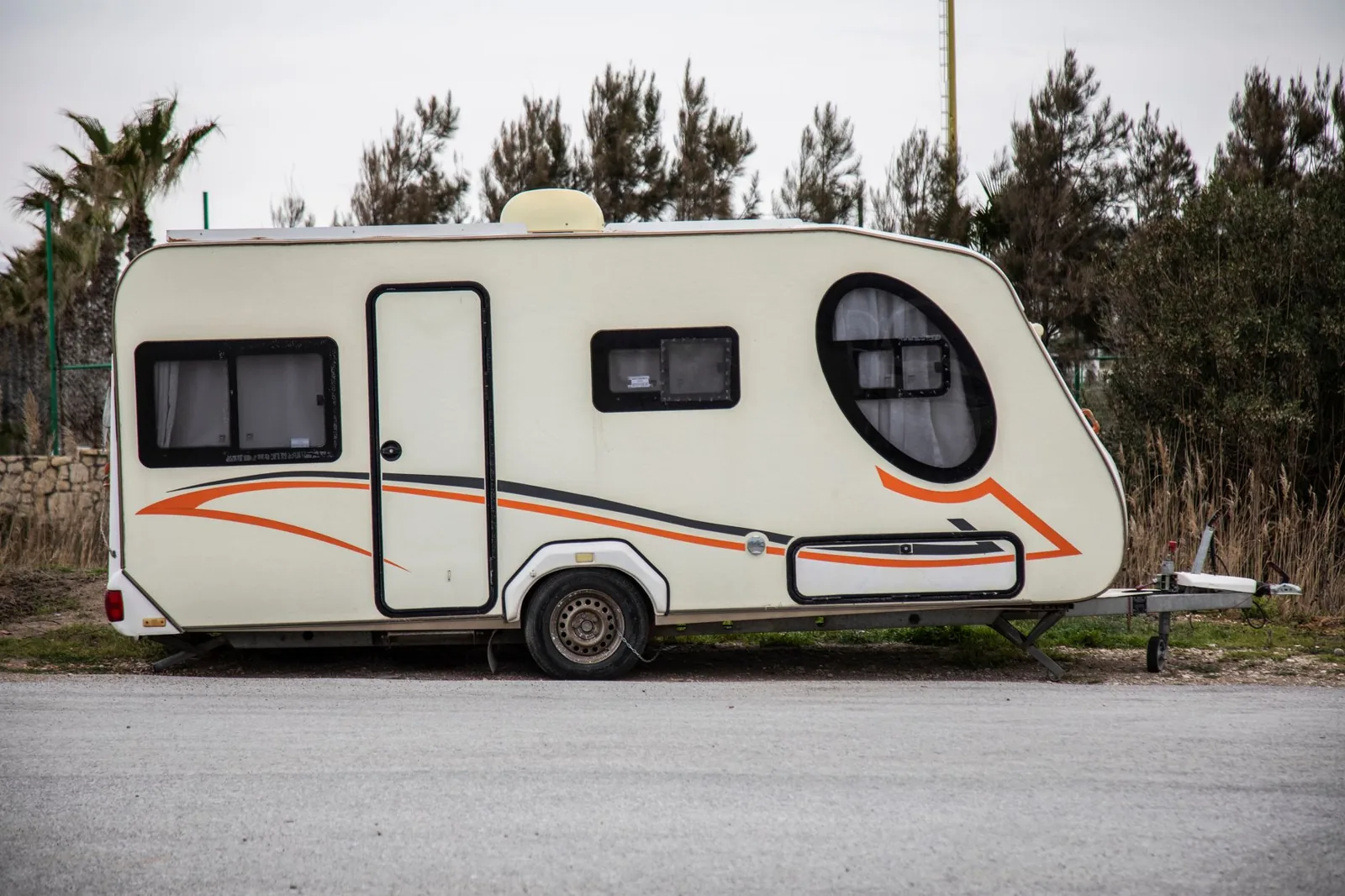
Photo by Engin Akyurt via Pexels
Towing Capacity: Match the Trailer to the Truck
The single most common and most expensive mistake buyers make is hitching a trailer their truck can’t safely pull. The rule of thumb: never exceed your vehicle’s payload rating or towing capacity with a fully loaded trailer, and leave a 15–20% safety margin.
- Half-ton trucks (F-150, Silverado 1500, Ram 1500, Tundra): Max tow ratings run roughly 9,000–14,000 lb, but payload is usually the limiting factor. Realistically, most half-tons tow a travel trailer up to about 8,000–10,000 lb comfortably. A fifth wheel is almost always too much pin weight for these trucks.
- 3/4-ton trucks (F-250, Silverado 2500HD, Ram 2500): Happy with larger travel trailers and most mid-size fifth wheels up to around 15,000 lb.
- 1-ton trucks (F-350, Silverado 3500HD, Ram 3500): Required for the biggest fifth wheels with pin weights above 3,000 lb.
Pin weight is the fifth wheel’s hidden gotcha: 20–25% of a fifth wheel’s weight sits directly on the truck bed, where a travel trailer only transfers about 10–15% onto the hitch. A 14,000 lb fifth wheel can put 3,000+ lb on your truck before you’ve added passengers or gear.
Storage and Maneuverability
Fifth wheels are taller — often 12.5 to 13.5 feet at the roofline — so bridge clearances and low limbs matter more, and some older campgrounds don’t have sites long enough for 40-foot rigs. Travel trailers, especially 30-foot and under models, slide into more sites, fit more garages, and are easier to store at home.
Neither is a joy to back up, but the fifth wheel’s over-axle hitch actually makes tight campground maneuvering more predictable once you learn the different turning geometry — the trailer pivots differently than a bumper-pull and needs more clearance when you cut the wheel.
Who Should Choose Each
Choose a travel trailer if:
- You own a half-ton truck or a capable SUV.
- This is your first RV, or you only camp a few weekends a season.
- You want to stay under $40,000 all-in.
- You value being able to store the rig at home.
Choose a fifth wheel if:
- You already own (or will buy) a 3/4-ton or 1-ton truck.
- You plan to live in it full-time or take months-long trips.
- You want a separate, tall master bedroom and apartment-scale living space.
- You’re willing to pay more up front for comfort and stability.
Frequently Asked Questions
Which is safer to tow, a travel trailer or a fifth wheel?
Fifth wheels are generally considered more stable at highway speed. The hitch sits over the rear axle, so crosswinds and passing trucks have less leverage. Travel trailers are perfectly safe when matched to the right truck with a good weight-distribution and sway-control setup, but they require more attention to loading and sway.
Can I tow a fifth wheel with a half-ton truck?
Rarely. A few of the largest half-tons can legally tow light fifth wheels under about 10,000 lb, but the pin weight usually exceeds the truck’s payload before you add passengers or gear. Most manufacturers and RV dealers recommend a 3/4-ton or larger truck for any fifth wheel.
Do travel trailers hold their value better than fifth wheels?
Both depreciate, but fifth wheels lose value faster in raw dollars because they cost more to begin with. A $70,000 fifth wheel might shed $20,000–$25,000 in the first three years; a $30,000 travel trailer might drop $8,000–$12,000 over the same period. Buying lightly used either way is the common way to blunt the hit.
Which is easier for first-time RVers?
A travel trailer. Lower entry price, more flexible towing options, and a simpler (cheaper) hitch make it the standard recommendation for beginners. The extra skill of managing a larger fifth wheel ride is easy enough to learn later.
How much does it cost to rent each type for a week?
Rental rates vary by region and season, but travel trailers on platforms like RVshare typically run $100–$180 per night, while fifth wheels run $150–$250 per night plus the cost of a suitable tow vehicle. For a full breakdown of weekly pricing, see our guide to RV rental cost per week.
The Bottom Line
The travel trailer vs fifth wheel choice really comes down to three numbers: your truck’s payload, your budget, and the number of nights you’ll actually spend in it. If you’re a first-timer or a weekend camper with a half-ton truck, a travel trailer is almost always the smarter, cheaper, simpler buy. If you’ll live in it full-time or want room to spread out for months on the road with a 3/4-ton or 1-ton truck already in the driveway, a fifth wheel earns its higher price tag.
Not sure you want to commit to ownership at all? Renting one for a week is the cheapest way to feel the difference for yourself. Peer-to-peer rental sites like RVshare let you test-drive both styles, and The Points Guy has detailed breakdowns of how families budget for the road. Start by matching the trailer to your truck — everything else flows from there.