
Duffel Bag vs Suitcase: Which One Should You Actually Pack?
Choosing between a duffel bag vs suitcase is one of the oldest debates in packing. Whether it’s a weekend road trip, a quick domestic flight, or two weeks abroad, the bag you grab changes how smoothly the whole trip runs. Suitcases roll, stand on their own, and keep your clothes organized. Duffels are lighter, softer, and squeeze into spaces a hard case will never fit.
There’s no single right answer here — the better bag depends on where you’re going, how you’re getting there, and what you’re carrying. This guide breaks down weight, packing space, airline rules, and durability so you can pick the one that actually suits your trip instead of the one your Instagram feed told you to buy.
Duffel Bag vs Suitcase: The Short Answer
If you want the fast verdict, here it is. Choose a suitcase for longer, organized trips where you’ll roll your bag through airports, train stations, and hotel lobbies. Choose a duffel bag for short trips, car travel, gym runs, or any situation where you need to toss a bag into a trunk, an overhead bin, or a tight corner.
- Suitcases win on organization, protection, and ease of rolling through airports.
- Duffels win on weight, flexibility, and squeezing into awkward spaces.
- Wheeled duffels exist, but they usually combine the downsides of both — heavier than a duffel and less structured than a suitcase.
Most frequent flyers end up owning both. The real question is which one you reach for on a given trip, and the sections below are meant to help you answer that.
Weight and Packability
Weight is where the duffel almost always wins. A 40-liter Patagonia Black Hole Duffel weighs about 2.9 pounds. A comparable 40-liter hard-shell carry-on such as the Away Carry-On Flex or the Monos Carry-On weighs closer to 8 pounds. That five-pound difference sounds small until you’re lifting a bag into an overhead bin, carrying it up three flights of stairs in a European walk-up hotel, or trying to stay under a budget airline’s weight cap.
Budget carriers make this matter more than it used to. Spirit and Frontier limit carry-ons and charge for bags that go over size, while Ryanair and easyJet in Europe are strict about both dimensions and weight. A soft duffel lets you under-pack a little and still slide through. A rigid suitcase gives you no such slack.
The duffel’s other advantage is that it disappears when you’re not using it. Empty it out and it folds nearly flat to slide under a bed or onto a closet shelf. An empty suitcase still takes up the same footprint — a real consideration if you live in an apartment or want to stash a spare bag for a future trip.
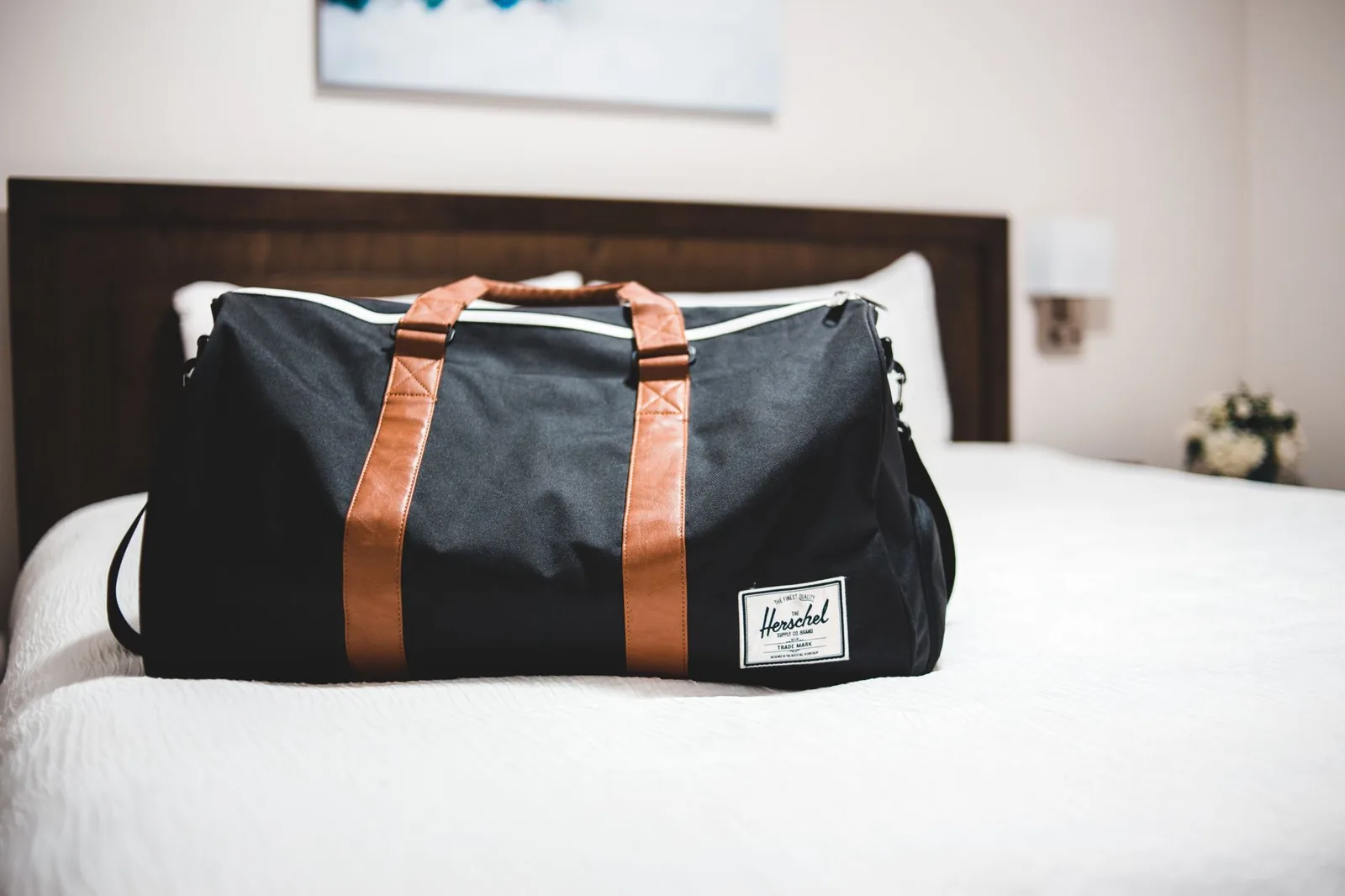
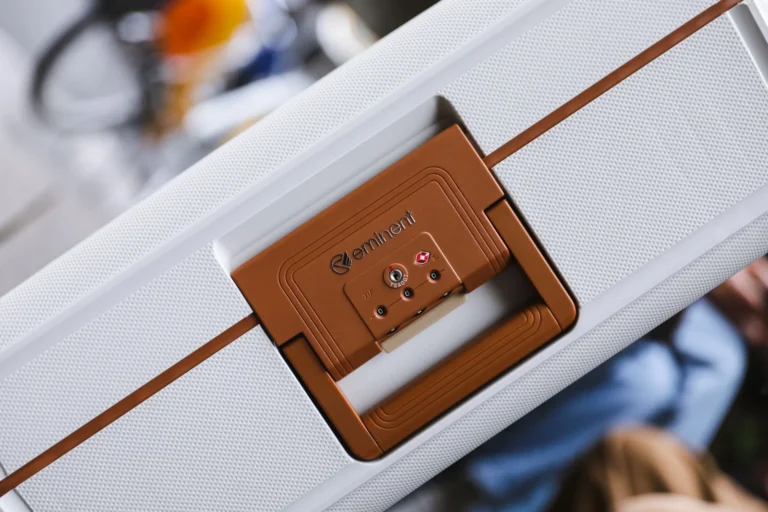
Photo by Erik Mclean via Pexels
Packing Space and Organization
Suitcases are built around structure. A clamshell opening, compression straps, and zippered dividers mean you can pack in flat, tidy layers and live out of the bag for a week without emptying it every night. That’s why a suitcase is easier to keep organized on a 10-day trip with work clothes, shoes, and a toiletries kit.
A duffel is one big open cavity. You can fit more odd-shaped gear — a helmet, hiking boots, a puffy jacket, camera gear — but you’ll be digging to the bottom to find a single pair of socks. Some duffels fix part of this. The Eagle Creek Cargo Hauler and The North Face Base Camp Duffel add side pockets, mesh compartments, and U-shaped zippers, but none of them match a suitcase’s flat packing panels and dividers.
Capacity is also trickier to compare than it looks. Duffels are usually sold in liters (40L, 70L, 90L) while suitcases are sold in inches or “carry-on,” “medium,” and “large.” A 40L duffel and a 40L carry-on suitcase hold roughly the same volume, but the suitcase uses it more efficiently because the space is squared off and organized.
| Feature | Duffel Bag | Suitcase |
|---|---|---|
| Weight (40L class) | 2–4 lb | 7–9 lb |
| Organization | Open cavity, a few pockets | Clamshell, dividers, straps |
| Fits in tight spaces | Excellent | Poor |
| Protects fragile items | Limited | Strong (hardshell) |
| Stows when empty | Folds nearly flat | Same bulky footprint |
| Typical price (carry-on) | $60–$180 | $120–$350 |
Airline and Carry-On Rules
Most US airlines accept a carry-on around 22 x 14 x 9 inches. American, Delta, and United all use that number, and it’s why most wheeled carry-ons are manufactured to hit it exactly. A duffel is easier to under-pack and squish into a sizer, but a fully stuffed duffel can bulge past the limit faster than you expect — soft fabric has no hard edges to keep you honest.
If you’re buying specifically to fly, check the carry-on luggage size limits for the airlines you actually book — The Points Guy keeps an updated airline-by-airline chart of carry-on dimensions and fees that’s worth a look before you buy. A wheeled bag that’s 23 inches tall can get gate-checked on a strict airline, while a soft duffel that’s technically larger will often compress into the sizer and slide through. The trade-off is that a duffel gives you no wheels for the long walk from check-in to your gate.
Weight is the other half of the equation, and it varies widely by carrier. US domestic airlines rarely weigh carry-ons, but many international and low-cost carriers do, with caps often sitting between 7 and 10 kg. Our guide to the carry-on luggage weight limit covers those numbers in detail. A 3-pound duffel leaves more of that allowance for your actual stuff than a 9-pound suitcase does.
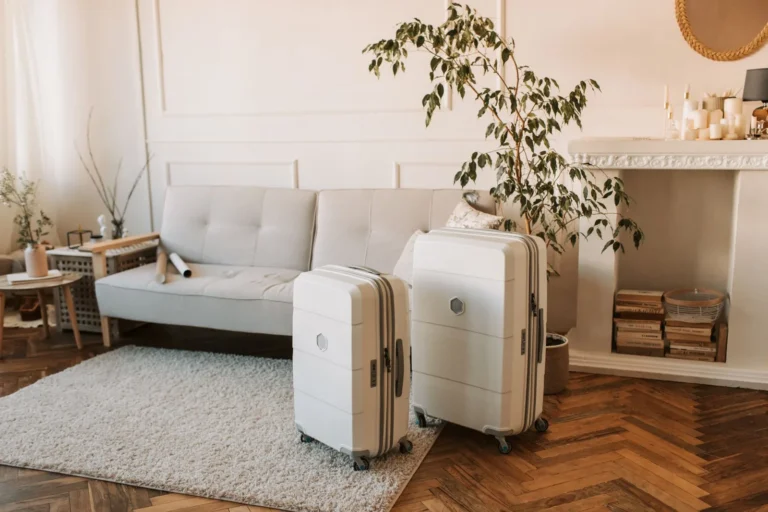
Photo by SHVETS production via Pexels
Durability and Handling
A quality suitcase lasts a long time, but its weak points are the parts that move: wheels, telescoping handles, and zippers. One broken wheel on a cobblestone street in Lisbon and you’re dragging the thing sideways for the rest of the trip. Hardshell polycarbonate (the material behind Away, Monos, and Samsonite’s newer lines) resists impacts well but can crack under a hard drop or a rough baggage handler.
A duffel has almost nothing to break. No wheels, no handle mechanism, no hard shell to crack. A well-made one — Patagonia, The North Face, Eagle Creek, or Osprey — uses heavy denier fabric and can take years of abuse. Travel + Leisure’s gear testers run these bags through real airports and trails, and their duffel roundups are a reliable place to compare current models. The trade-off is protection. Put a laptop or a bottle of wine in a soft duffel and it’s only as safe as your packing skills, while a hardshell suitcase with good internal straps does the protecting for you.
Comfort while carrying also cuts opposite ways. A wheeled suitcase is effortless on smooth floors and terrible on gravel, grass, or stairs. A duffel with a padded shoulder strap or backpack straps (the Patagonia Black Hole and Cotopaxi Allpa duffels both offer them) lets you go hands-free through a train station or up a staircase, at the cost of carrying the full weight on your body.
What Each One Does Best
To make the duffel bag vs suitcase call concrete, here’s where each one genuinely shines.
Reach for a suitcase when:
- You’re flying for a week or more and want organization.
- You’re carrying work clothes, a laptop, or anything you don’t want crushed.
- You’ll be rolling through airports, hotels, and paved city streets.
- You’re checking a bag and want something that survives baggage handling.
Reach for a duffel bag when:
- You’re driving, taking a weekend trip, or heading to the gym or a cabin.
- You’re flying a budget airline with strict size and weight caps.
- You’re hauling odd-shaped gear like boots, helmets, or camera bags.
- You want a bag that folds flat and stores out of the way when it’s not in use.
There’s also a middle path worth mentioning: a soft-sided or hybrid bag. Soft-sided suitcases (like the Travelpro Maxlite 5 or Delsey’s soft collections) weigh less than hard shells while keeping wheels and some structure, and they’re a solid compromise if you travel both ways. And if you’re weighing checked luggage against carry-on for a longer trip, our breakdown of carry-on luggage vs checked luggage walks through the trade-offs.
For most people the honest answer is two bags: a wheeled suitcase for the long-haul and business trips, and a lightweight duffel for everything short, active, or car-based. Start with whichever matches the trip you take most often.
Frequently Asked Questions
Is a duffel bag better than a suitcase for carry-on?
For many short flights, yes. A duffel is lighter and compresses into a sizer more easily, which matters on strict airlines like Ryanair, easyJet, Spirit, and Frontier. But it lacks wheels and organization, so it’s less convenient on longer walks and longer trips.
Can I use a duffel bag as a carry-on?
Yes, as long as it fits the airline’s size limits, typically around 22 x 14 x 9 inches on US carriers. A 40L duffel usually fits as a carry-on; a 70L or 90L duffel will need to be checked. Always under-pack a duffel a little so it can compress into the sizer if asked.
How many liters should my duffel be?
Roughly 30–40L for a weekend or a strict carry-on, 50–70L for a week or a mix of gear, and 90L+ for duffels that will be checked or live in the back of a car. Match the liter size to the trip length rather than buying the biggest bag you can find.
Do duffel bags count as a personal item?
A small duffel (around 20–30L) can pass as a personal item if it fits under the seat in front of you, but a full-size duffel counts as a carry-on. Check the airline’s personal-item dimensions before you plan on stashing a duffel under the seat.
Which is better for international travel, a duffel or a suitcase?
A suitcase is usually better for long-haul international trips because you’ll be moving through large airports and living out of the bag for a week or more. A duffel wins for trips that involve budget airlines, lots of stairs, or destinations with cobblestone streets and limited paving.
The Bottom Line
The duffel bag vs suitcase question doesn’t have a single correct answer, but it does have a predictable one. If your trips are mostly flights with real airports and you value organization and easy rolling, buy a good suitcase — hardshell if you want protection, soft-sided if you want to save weight. If your trips are short, active, or road-based, and you’d rather travel light than travel organized, a quality duffel from a brand like Patagonia, The North Face, or Eagle Creek will serve you for years.
Whatever you choose, match the bag to the trip in front of you rather than the trip you imagine taking. A bag that fits your actual airline’s size and weight limits, and your actual style of travel, is worth far more than the fanciest bag in the shop.
Ready to dig deeper? Start with our guide to carry-on luggage size to make sure whatever you buy actually fits in the overhead bin.