Suitcase Size for International Travel: Checked Bag Dimensions and Weight Limits
Choosing the right suitcase size for international travel is the difference between a smooth drop-off at the counter and a surprise $100 charge for a bag that’s two inches too big. Spend ten minutes on the rules now and you’ll never stand at check-in repacking your suitcase onto the floor while a line of impatient travelers watches.
Most travelers overthink this. The airlines aren’t keeping the rules a secret, and a handful of numbers cover nearly every major carrier in the world. This guide walks through the size and weight limits that actually matter, the suitcase dimensions that meet them, and how to pick the right bag for the length of your trip.
Suitcase Size for International Travel: What Airlines Actually Limit
Here’s the number to remember: 62 linear inches, or 158 cm. That’s the combined total of a checked bag’s length, width, and height, and it’s the ceiling on nearly every major international route. Add all three dimensions of your suitcase, and the sum has to stay at or under these figures or the airline classifies it as oversized.
The second number is weight. Most international economy tickets allow a checked bag of 23 kg (50 lb), though it varies by airline, fare class, and route. Some carriers in Asia and the Middle East are more generous, and budget airlines are considerably tighter.
The practical takeaway is simple: buy a suitcase whose printed dimensions add up to something safely under 62 inches, because the airline will measure the bag as packed, wheels and handles included. If you haven’t thought about this before, start with our full rundown of carry-on luggage size, which explains where cabin rules differ from checked rules.
Three Checked Suitcase Sizes Compared
Suitcases are sold by their height, from 24 inches up to 30 inches and beyond. Here’s how the common sizes stack up, assuming a standard expandable spinner.
| Suitcase Size | Typical Dimensions (in) | Linear Inches | Capacity | Empty Weight | Best For |
|---|---|---|---|---|---|
| 24″ Medium | 24 x 16 x 10 | 50 | 65–70 L | 7–8 lb | 3–5 day trips |
| 26″ Medium-Large | 26 x 18 x 11 | 55 | 80–90 L | 8–9 lb | 5–7 day trips |
| 28″ Large | 28 x 19 x 12 | 59 | 100–110 L | 9–10 lb | Week-plus trips, shared bags |
| 30″ Extra Large | 30 x 21 x 13 | 64 | 115–125 L | 11–12 lb | Long haul, but often oversize |
Notice the trap in that last row: a “30-inch” suitcase usually pushes past 62 linear inches once the wheels and expansion zipper are included. That’s how a bag that looks ordinary on a store shelf gets flagged as oversized at the airport.
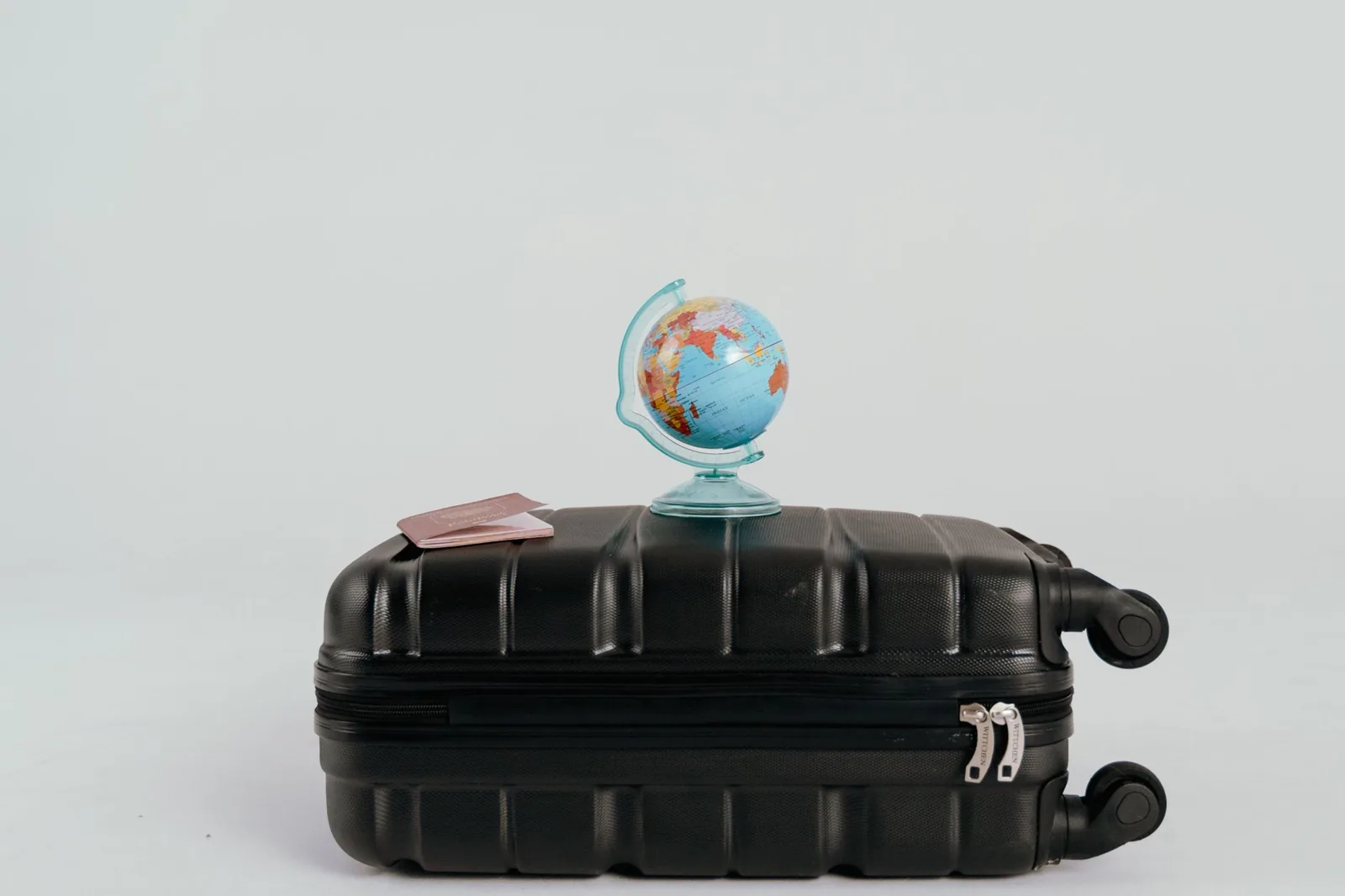
Photo by Tima Miroshnichenko via Pexels
The 62-Inch Rule, Explained
Airlines don’t care how tall your bag is on its own. They care about the total of all three dimensions, because that’s what limits how many bags fit on the baggage belt and in the cargo hold.
To measure your own bag, lay it flat and measure length, width, and depth at their widest points — including the handle, the wheels, and any bulging pocket. Add the three numbers together. If they come to 62 inches or less (158 cm), your bag clears the standard international limit. If they come to 63 or more, expect an oversize fee, usually $150 to $200 each way.
This is also why you should build in a safety margin. A bag whose specs total 59 or 60 inches leaves room for the slight expansion that happens when you stuff it full. A bag spec’d right at 62 has zero slack.
One more thing: the 62-inch rule applies to checked bags, not the smaller bag you wheel through security. If you’re weighing whether to check your bag at all, our carry-on luggage vs checked luggage guide runs the numbers for short and long trips.
Checked Bag Weight Limits and Oversize Fees
Weight is where international travelers get caught more often than size, because the same 23 kg limit that feels generous at home gets eaten quickly once you add shoes, gifts, and souvenirs.
Most major airlines set these checked-bag thresholds:
- 23 kg (50 lb) — the standard economy allowance on Delta, United, American, British Airways, Lufthansa, and Air France.
- 20 kg (44 lb) — common on budget airlines such as Ryanair’s 20 kg bag option.
- 25–30 kg (55–66 lb) — found on several Middle Eastern and Asian carriers, including Emirates, which typically allows 25–30 kg depending on the fare.
Go over the limit and the fees climb fast. On US carriers, a bag between 51 and 70 lb adds about $100 each way, and 71–100 lb adds $200 or more. Many airlines simply refuse bags over the top threshold for safety reasons, which means you could be repacking in the terminal or paying to ship a box home.
The easiest defense is a luggage scale. A compact digital one costs $10 to $15 and takes the guesswork out of the whole process — weigh at home, not at the counter. We cover the specific numbers by carrier in our carry-on luggage weight limit guide, and the logic for checked bags is the same: check before you fly.

Photo by ZhiCheng Zhang via Pexels
Hardshell vs. Softshell for Checked Luggage
For checked bags, the hardshell-versus-softshell decision matters more than it does for carry-ons, because your bag is about to be thrown onto conveyors and stacked in a hold.
Hardshell (polycarbonate or ABS) spreads impact across its shell and keeps curious handlers from unzipping the seams, but heavy shells eat into your weight allowance. A 28-inch polycarbonate suitcase from a brand like Samsonite’s Winfield 3 DLX (around $200–$240) can weigh 10 lb empty. That’s fine on a 50 lb limit but tight on a 20 kg budget airline.
Softside bags are lighter for the same volume and typically have outside pockets that make last-minute packing easier. The Travelpro Platinum Elite 25-inch expandable spinner (around $320) is a favorite of flight crews for exactly this reason, and its self-aligning wheels survive years of cobblestones and baggage carousels.
If you want the maximum protected space for the money, a large softside is hard to beat. If you carry electronics, bottles, or gifts, the hardshell’s rigidity earns its extra weight.
Matching Suitcase Size to Your Trip Length
The right suitcase size is a function of how long you’ll be gone and whether you’re willing to do laundry. A few practical pairings:
- Long weekend (3–4 days): a 24-inch bag or even a large carry-on is plenty. On many international tickets you could skip checked baggage entirely.
- One week (5–7 days): a 26-inch bag holds a week of clothes with room for a jacket and shoes, and it stays comfortably under the 62-inch ceiling.
- Ten days to two weeks: a 28-inch bag is the workhorse here. At roughly 100 liters, it fits two weeks of outfits or a week’s worth for two people sharing.
- Three weeks or more: a 28-inch with a compression-packing setup beats a 30-inch every time, because the 30-inch risks oversize fees and is miserable to move through train stations.
The pattern is consistent: most people buy too much suitcase. A 28-inch spinner with packing cubes handles almost everything, and it’s far easier to lift into overhead racks on European trains than an oversize 30-inch monster you can barely roll.
Frequently Asked Questions
What size suitcase is allowed on international flights?
For checked luggage, the near-universal limit is 62 linear inches (158 cm) — that’s length plus width plus height. In real terms, that means a 28-inch suitcase is usually safe, while a 30-inch suitcase often tips past the limit. Weight is usually capped at 23 kg (50 lb) in economy.
What size suitcase is 23 kg?
A 23 kg (50 lb) suitcase typically corresponds to a 25- to 28-inch checked bag packed full. A 28-inch suitcase holds roughly 100–110 liters and, when filled with typical clothing, lands right around that 23 kg mark — which is exactly why airlines settled on that number for their standard allowance.
Do airlines charge for overweight or oversized suitcases?
Yes. A bag under the weight limit but over 62 linear inches, or a bag the right size but over 23 kg, will trigger fees of $100 to $200 each way on most carriers. Very heavy bags — over 100 lb in some cases — may not be accepted at all on international flights.
What’s better for international travel: a 24 or 28-inch suitcase?
For trips of a week or more, the 28-inch is the better default because it stays under the 62-inch limit while carrying about 40% more than a 24-inch. The 24-inch wins for short trips or budget carriers with tight weight caps, where the lighter empty weight leaves more of your allowance for actual contents.
Is carry-on or checked luggage better for international travel?
It depends on the trip. Carry-on-only travel skips baggage fees and the risk of lost luggage, but international carry-on limits are often smaller than US domestic ones. For longer trips, one properly-sized checked bag usually makes more sense. Compare the tradeoffs in our carry-on luggage for international travel guide.
The Bottom Line
Suitcase size for international travel comes down to two numbers you can memorize in ten seconds: 62 linear inches and 23 kg (50 lb). Buy a 26- or 28-inch suitcase whose three dimensions total 60 inches or less, keep the packed weight under the airline’s limit by weighing at home, and you’ll clear nearly every check-in desk in the world without a fee or a floor-repacking episode.
Before you book, confirm the exact limits on your airline’s own baggage page — that’s the source that matters, and comparison guides like The Points Guy’s checked baggage overview keep current fee tables for major carriers. Then start with a bag that fits the rule rather than hoping the one you already own will squeeze through.
Buy once, buy the right size, and let the suitcase do the worrying instead of you.